Author: Ruth Cannon
-

Irish Barrister of the Week: Pleasant Ned Lysaght (1763-1810)
This is a series to record Irish barristers of days gone by who, for one reason or the other, were never elevated to the position of judge (the shades of those so elevated can look forward to their own series). The series will feature the bad with the good, the…
-
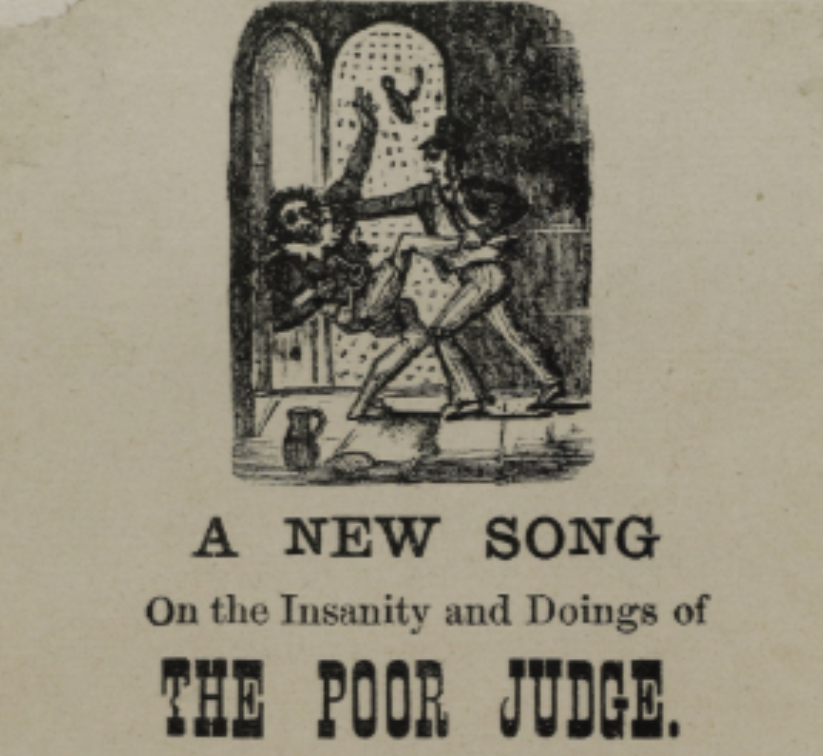
A New Song on the Insanity and Doings of the Poor Judge, 1878
The ‘Poor Judge’ of the following ballad is none other than William Nicholas Keogh, Judge of the Court of Common Pleas in Ireland, 1856-78. Lest they cannot be read from the above image, the lyrics of the ballad are as follows: “Oh! There’s another good man gone wrong, burreo hurreoWho…
-
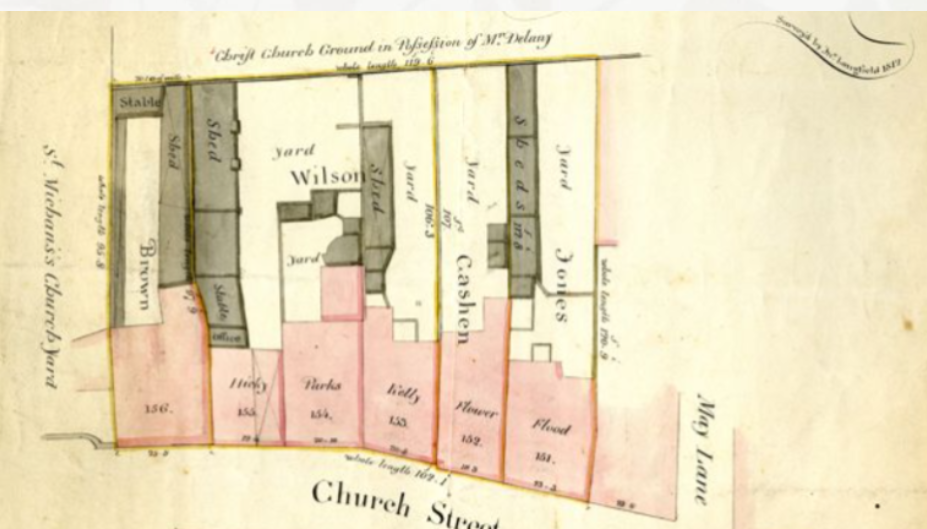
A Wide Street Commissioners Map of 152-155 Church Street, Dublin, c.1820
The Wide Street Commissioners map above depicts former buildings on the site 152-55 Church Street, Dublin, Ireland now occupied by Kings Building (image of the site today here) The area on the opposite side of May Lane on the map is now the Law Library annexe 145-151 Church Street (the numbering…
-
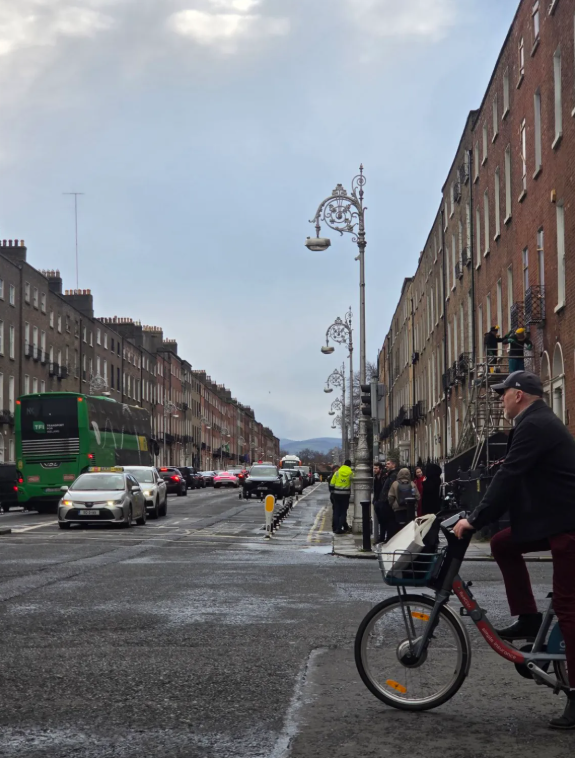
Solicitor Charged with Unheard-Of Cruelties to Teenage Daughter, 1840
A remarkable story from the College Street Magistrates’ Court, Dublin, 1840, involving cruel treatment by a solicitor and sub-sheriff of Dublin, John Robert Malone, of his teenage daughter. Locked in her room at 5 Fitzwilliam Street, Dublin, without change of dress, fire or candle, she had to obtain food on…
-

Female Forger Surprised by Judge at her Lodging in Church Street, 1803
Forgery near the Four Courts, Dublin, Ireland in 1803, when the very active Mr Justice Bell, who carried out many arrests of criminals in Dublin in the first decade of the 19th century, apprehended Mrs Kearns at her lodgings in Church Street in the early hours of the morning. A…
-
Tales from the Dublin Police Court, 1917: Twenty Youths Arrested for Illegal Drilling Sing the Soldier’s Song
A vignette from the Dublin Police Court of 1917 as twenty youths arrested for illegal drilling repeat their alleged offence in the Dublin Police Court while singing the Soldier’s Song – just one of many political protests which took place in Irish courtrooms during the period 1917-1925. There was much…
-
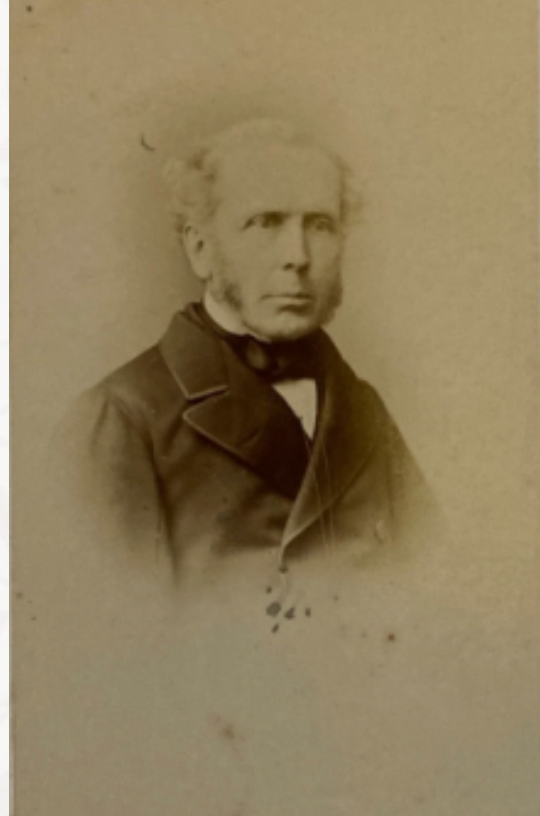
Why Judges Should Not Write Down their Judgments, 1877
From the Irish Times of 17 November 1877, this complaint about Jonathan Christian (image above), Lord Justice of Appeal in the Irish Court of Chancery (1867-78) and later briefly Lord Justice of the Court of Appeal in Ireland (1878): “Lord Justice Christian has adopted the habit of writing his judgments,…
-

Death of an Irish Lord Chancellor in Hyde Park, 1913
From the Daily Express, 23 May 1913: “PEER’S FATAL SEIZURE IN HYDE PARK LORD ASHBOURNE DIES IN ST GEORGE’S HOSPITAL Lord Ashbourne, the famous ex-Lord Chancellor of Ireland, who for a generation has been one of the most notable figures in Irish life, died under dramatic circumstances in St George’s…
-
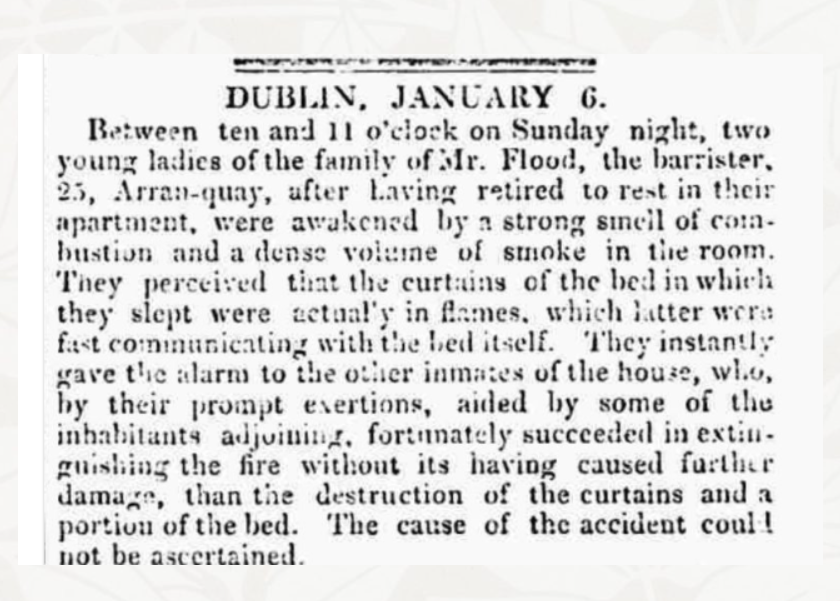
Barrister’s Daughters’ Bed Mysteriously Goes on Fire at Arran Quay, 1836
The bed of two ladies of the family of Counsellor Flood mysteriously goes on fire at 25 Arran Quay in 1836. Carelessness with a candle or a spark from a fire? We can rule out spontaneous combustion on the part of the Misses Floods, as they both appear to have…
-

Opposing Counsel Interrupt Court to Fight a Duel, c.1780
Plenty of Irish barristers fought duels in the honour-heavy days of the 18th century, and, according to John Edward Walsh in ‘Sketches of Ireland Sixty Years Ago’ (1851), there was nothing unusual about their interrupting, to do so, court proceedings in which they were retained as counsel. See below this…
-

A Letter from Malcolm Johnston, Key Prosecution Witness in the Dublin Scandals, 1884
This rather explicit letter from 20 year old Malcolm Johnston, heir to Johnston’s Bakery, Ballsbridge, to James Pillar, a Rathmines wine and tea merchant three times his age, was included in the brief to Counsel in the Dublin Scandals trials of 1884, in which Pillar was an accused and Johnston…
-
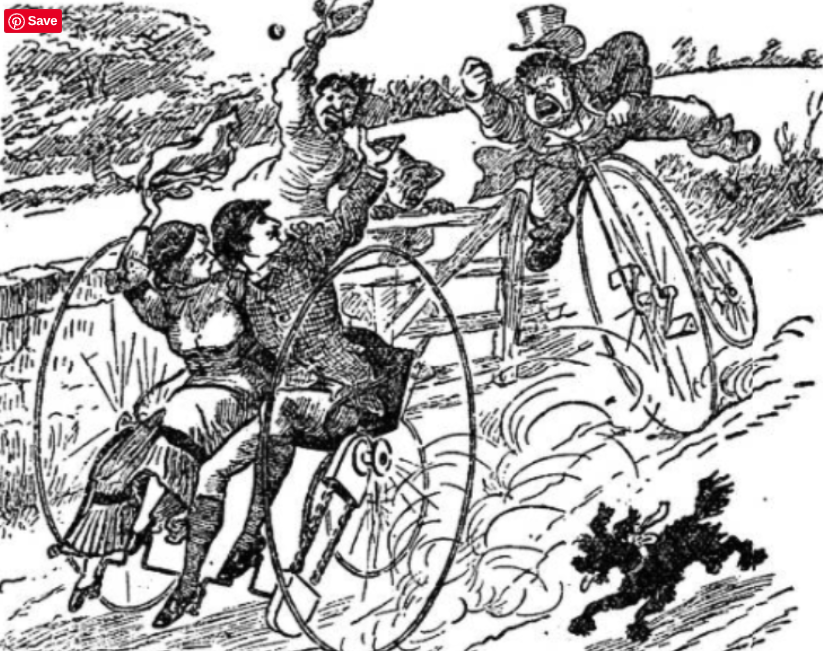
Tricycle Made for Two Ends in Tragedy for Vacationing Irish Barrister, 1888
The ‘tricycle made for two’ craze of the late 19th century, immensely popular among members of the legal profession and their spouses, ended in tragedy for Irish barrister Walter Long BL, who was involved in a serious accident in the summer vacation of 1888, when his foot got caught in…
-
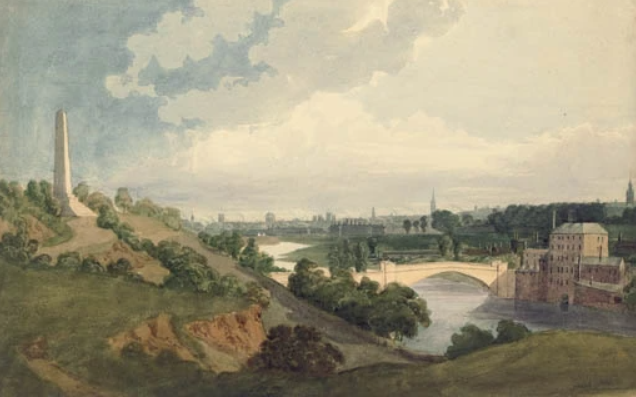
The Four Courts in the Far Distance, 1827
The dome of the Four Courts, Dublin, Ireland, is visible in the far distance in Joseph Nash the Elder’s ‘A View of Dublin from the Liffey’ (1827), via Mutual Art. The Four Courts in 1827 was at the zenith of its significance in Dublin life, with Dubliners of all classes…
-
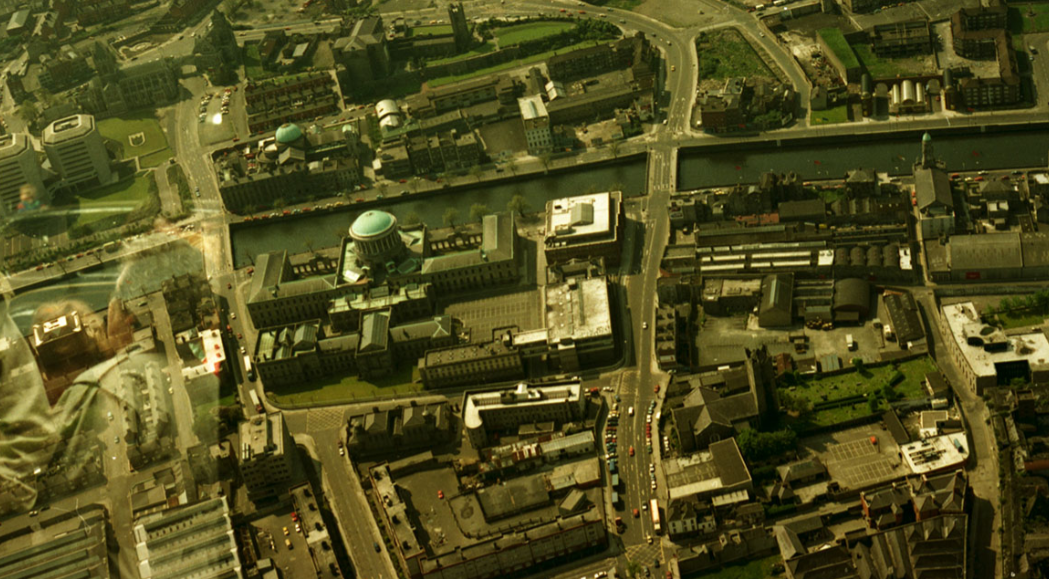
An Aerial View of the Four Courts, Dublin, 1980s
An aerial view of the Four Courts, Dublin, Ireland by Leo Swan, via Europeana. Not much change in the Four Courts itself, but the image shows us Hammond Lane and Church Street as they were before the Law Library buildings at Church Street, and barristers’ chambers at Arran Quay, were…
-

Apprentice Solicitor Barred from Lectures by Officious Porter Pens Letter to Newspaper, 1885
An 1885 letter of complaint written to the Freeman’s Journal by James Hamerton, apprentice solicitor, bemoaning the door-closing policy of ‘Chew.’ the over-officious porter in the Solicitors’ Building, Four Courts, Dublin, Ireland. Compulsory lectures had been introduced for Irish apprentice solicitors not long before, a development not welcomed by all…
-
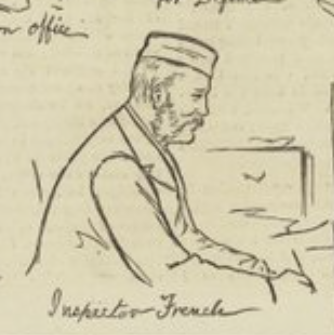
The Dublin Scandals: The Rise and Fall of Inspector James Ellis French, 1858-1884
Out of the eight men put on trial for homosexual offences in the Dublin Scandals of 1884, two of them – Gustavus Cornwall, the head of the Irish Post Office and James Ellis French – head of the Intelligence Department of the RIC – held high positions in the British…
-

The Dublin Scandals: Timeline and Dramatis Personae, 1884
That phenomenon of litigation and prosecution which became known as ‘the Dublin Scandals’ commenced in 1883 with a series of articles published by William O’Brien M.P. in his journal ‘United Ireland’. The articles were directed at James Ellis French, chief of the Detective Department of the Royal Irish Constabulary, whom…
-
Nothing New Under the Sun: James Pillar and the Prosecution Brief in the Dublin Scandals of 1884
Ireland had its own Epstein scandal in 1884. No island was involved, but rather a grocery shop run by James Pillar at 56 Rathmines Road, Dublin, where, in the evening, its owner offered to a different set of customers the pick of the market in young men. Known as ‘Papa,’…
-
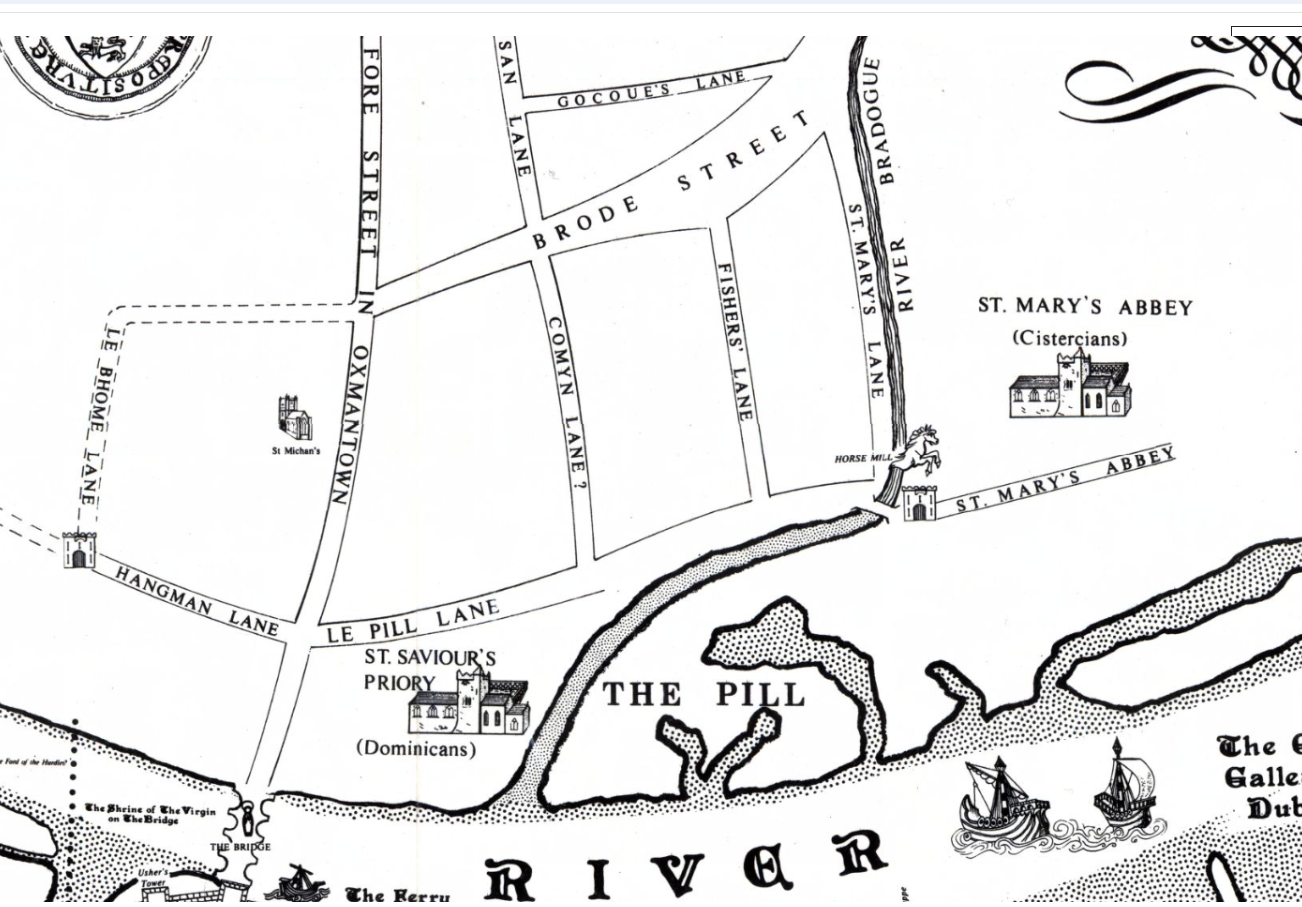
The Four Courts and its Vicinity in Medieval Times, 1224-1540
The Four Courts site and surrounding area in medieval times, as depicted in a map prepared by the Friends of Medieval Dublin and printed by the Ordnance Survey. Visible on the map are the Bradogue river and a number of inlets where Chancery Street and Ormond Quay are today, as…
-
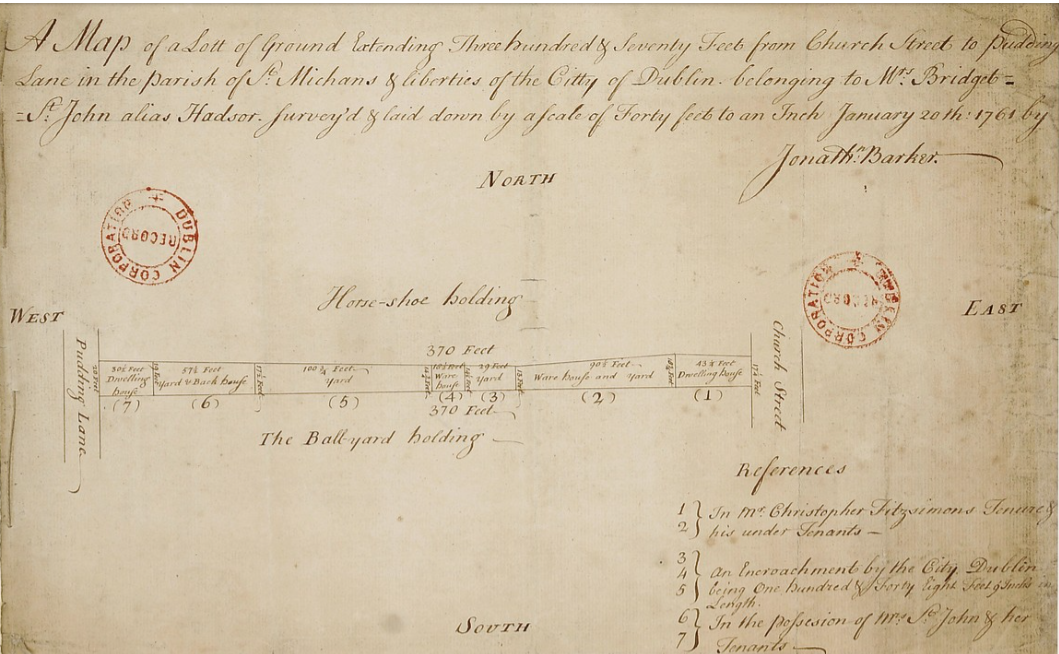
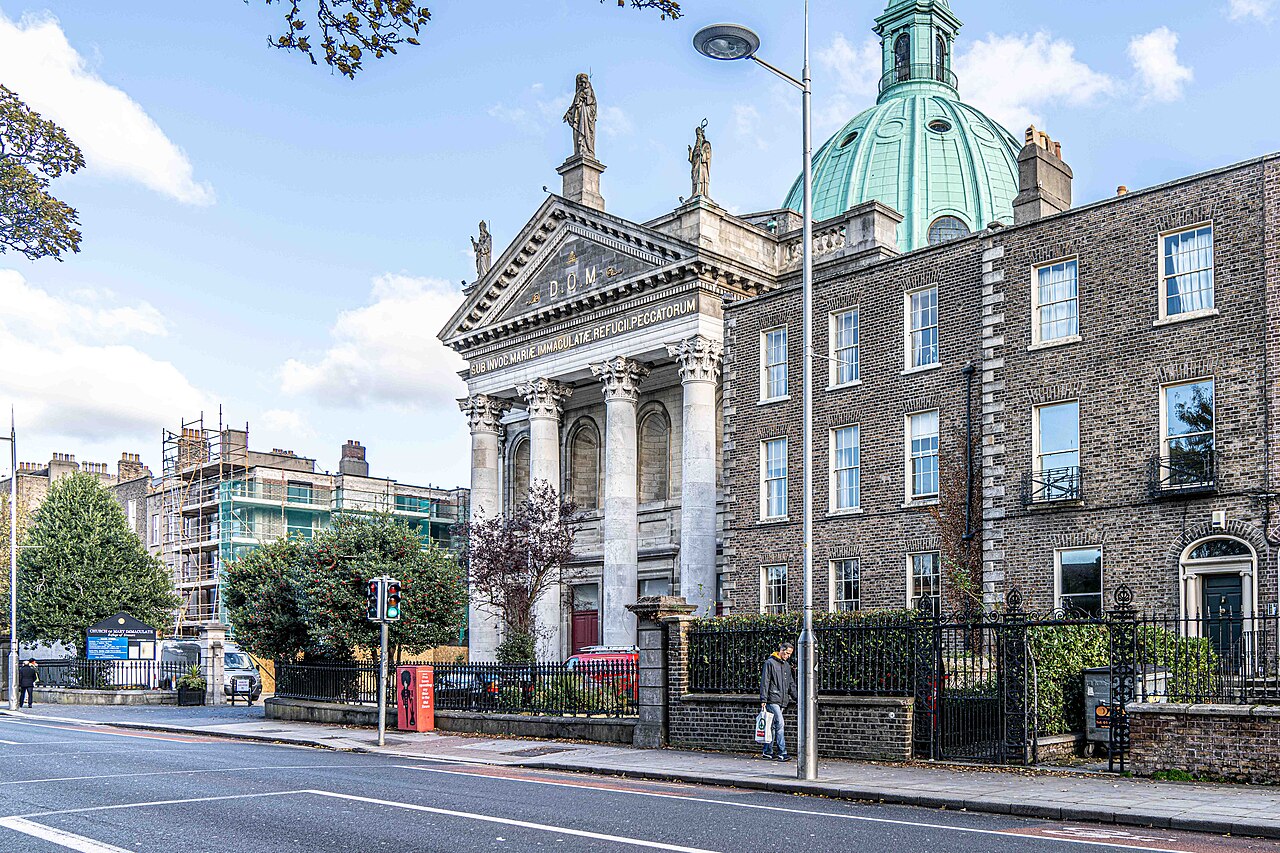
Arran Quay Barristers’ Chambers,Then and Now, 1761-2026
The above 18th century map from the Digital Repository of Ireland, via Europeana (zoom in here) delineates a narrow strip of land at the southern end of Church Street, Dublin, Ireland owned by Bridget St John, nee Hadsor and let by her to various tenants. The references to the adjacent ‘Ball…
-
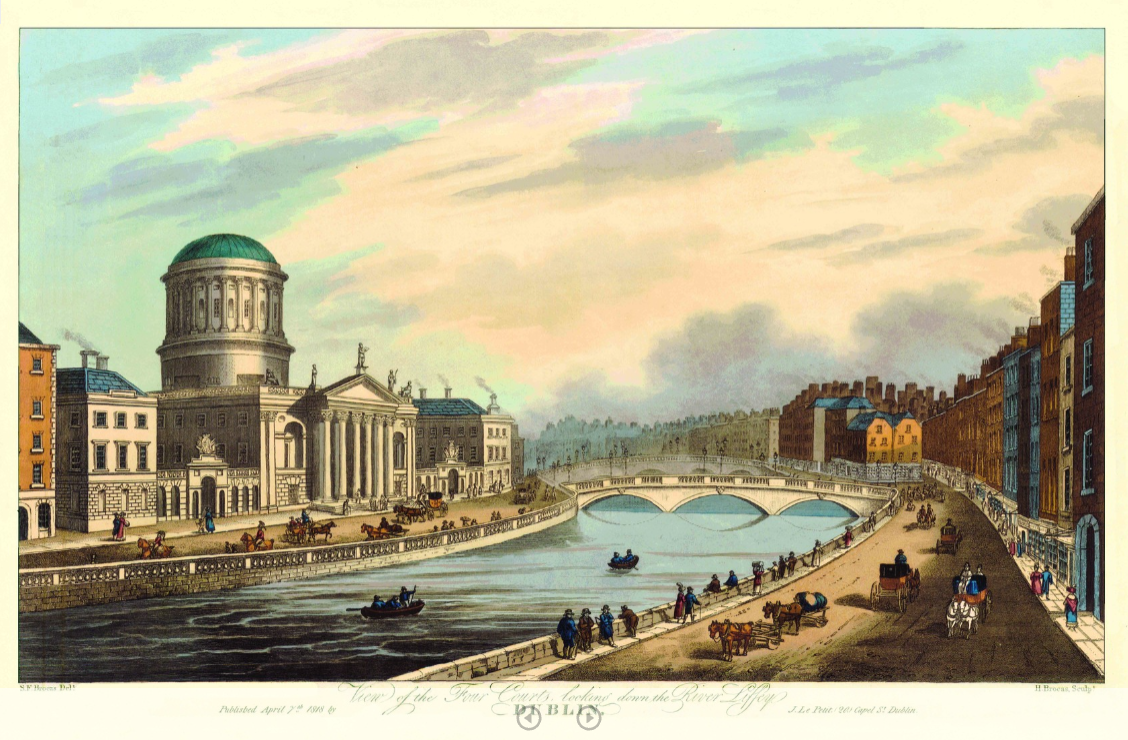
A View of the Four Courts by Brocas, c.1820
A very lovely view by Samuel Brocas depicting the Four Courts, Dublin, Ireland c.1820, which originally appeared in his Topography of Ireland of that year. It will be noted that the dome of the Four Courts stands noticeably higher than today. Its phallic appearance was alluded to obliquely in AM…
-

Tales from the Dublin Police Court: An American Girl in a Fight in Dublin, 1841
A remarkable case from the Dublin Police Court of 1841, involving ‘Ellen Rosalind Holmes,’ an American girl ‘of great beauty, and most elegantly dressed,’ allegedly seduced and brought to Europe by an English titled gentleman before being abandoned by him in Dublin The below clipping recounting her story is from…
-
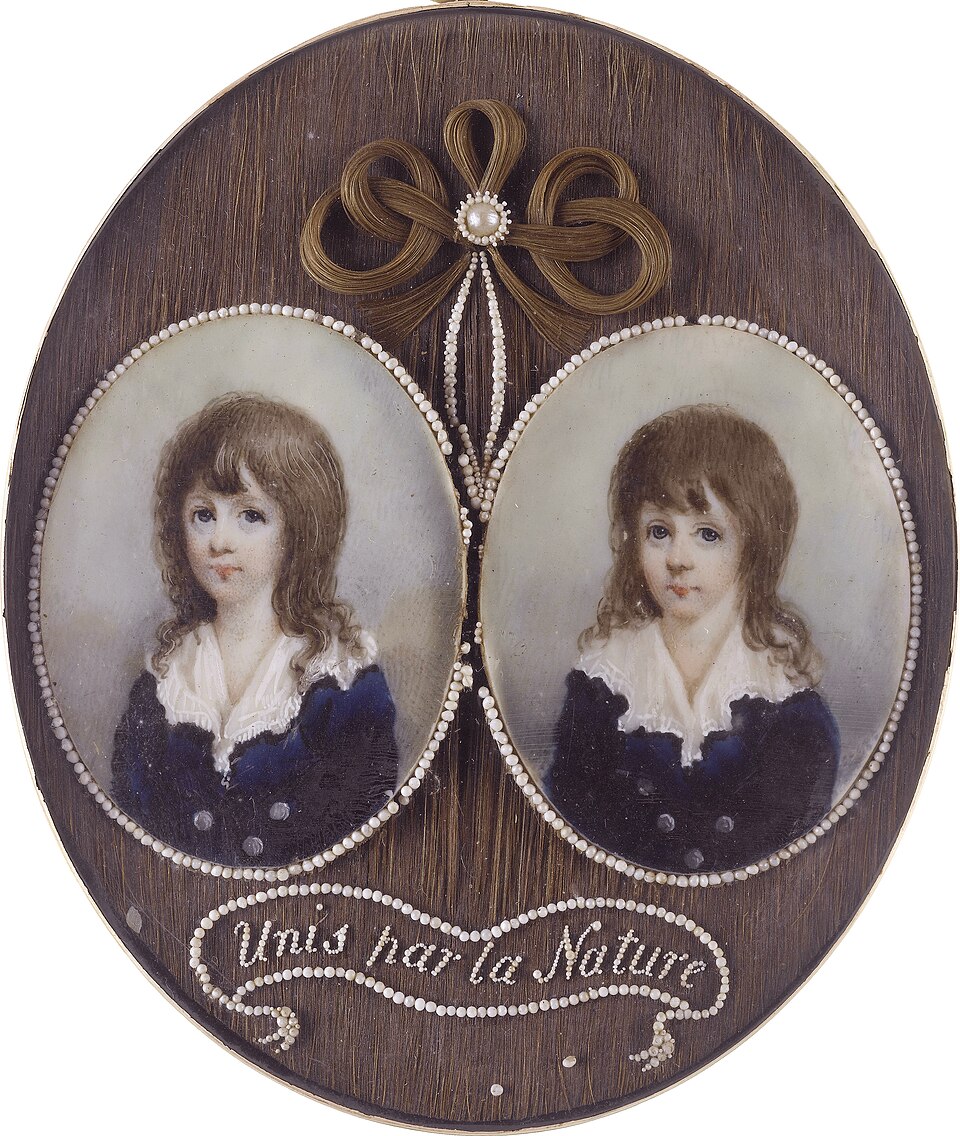
The Ill-Fated Twin Sons of Lord Norbury, 1781-1839
This charming double portrait by Horace Hone depicts Hector and Daniel, the twin sons of the notorious John Toler, 1st Earl of Norbury, Chief Justice of the Common Pleas for Ireland (1800-1827). In 1805, the boys, with their tutor, left Ireland for a Grand Tour of Europe, but their itinerary…
-

Barbarous Spouse Murder in Smithfield, Dublin, 1710
From the Dublin Intelligence, 28 March 1710: “Francis Eustace, Junior, formerly of Castlemore in the County of Catherlough, now of the City of Dublin, aged 25 or 26 years, a middle size slender Man, an oval face, a ruddy Complexion, a down Look, of few Words in Conversation, being of…
-

Solicitor-Solicitor Confrontation in Armagh Courthouse Ends in Substantial Damages Award, 1877
A 19th century image of Armagh Courthouse, via Wikipedia. From the Dublin Evening Telegraph, 10 May 1877, this story of an action brought by one Armagh solicitor against another arising out of a confrontation in the barroom of Armagh courthouse (above). The term ‘the Bar’ in the article refers not…
-

A Photographic Negative of the King’s Inns, Dublin, 1845
Probably the earliest photograph of Ireland’s oldest law school, the Honorable Society of King’s Inns, Dublin, taken by Henry Fox Talbot c.1845. At the time of the photograph James Gandon’s original building, completed by Francis Johnston in 1817, had yet to be extended by bays on either side. It appears…
-
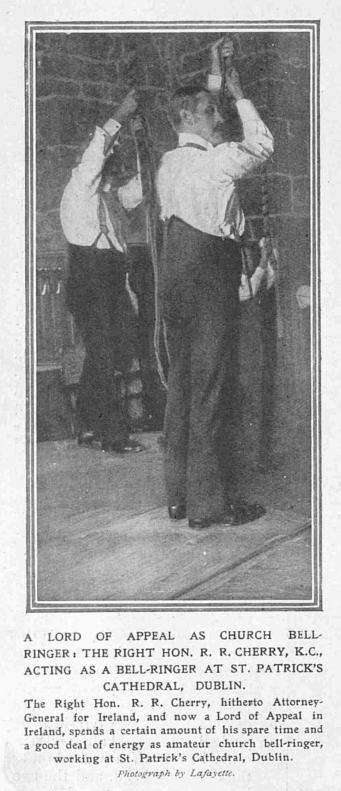
Lord Justice of Appeal in Ireland Rings in the Bells at St Patrick’s Cathedral, 1909
From the days when judges had time for extra-curricular pursuits, a photograph of Richard Cherry, Lord Justice of Appeal in Ireland (1909-1914) and later Lord Chief Justice of Ireland (1914-16) ringing the bells at St Patrick’s Cathedral, Dublin, which appeared in the Sketch of 19 December 1909. Described by the…
-

Tales from the Dublin Police Court: The Journalist Who Spent the Night in Nelson’s Pillar, 1888
From the Echo (London), 27 January 1888, the tale of John McCarthy, journalist, who escaped conviction in the Dublin Police Court after concealing himself for the night in the monument known as ‘Nelson’s Pillar,’ Sackville Street, Dublin. Ireland. Mr McCarthy’s article, accompanied by the above illustration of the Pillar, appeared…
-

A French Officer Visits the Old Four Courts, 1759
A watercolour of the archway providing access to the Old Four Courts at St Michael’s Hill, Dublin, beside Christchurch, by James Grattan, via the Victoria and Albert Museum. The courts were against the side of the Cathedral, in a building behind the houses. By the time of Grattan’s watercolour, this…
-
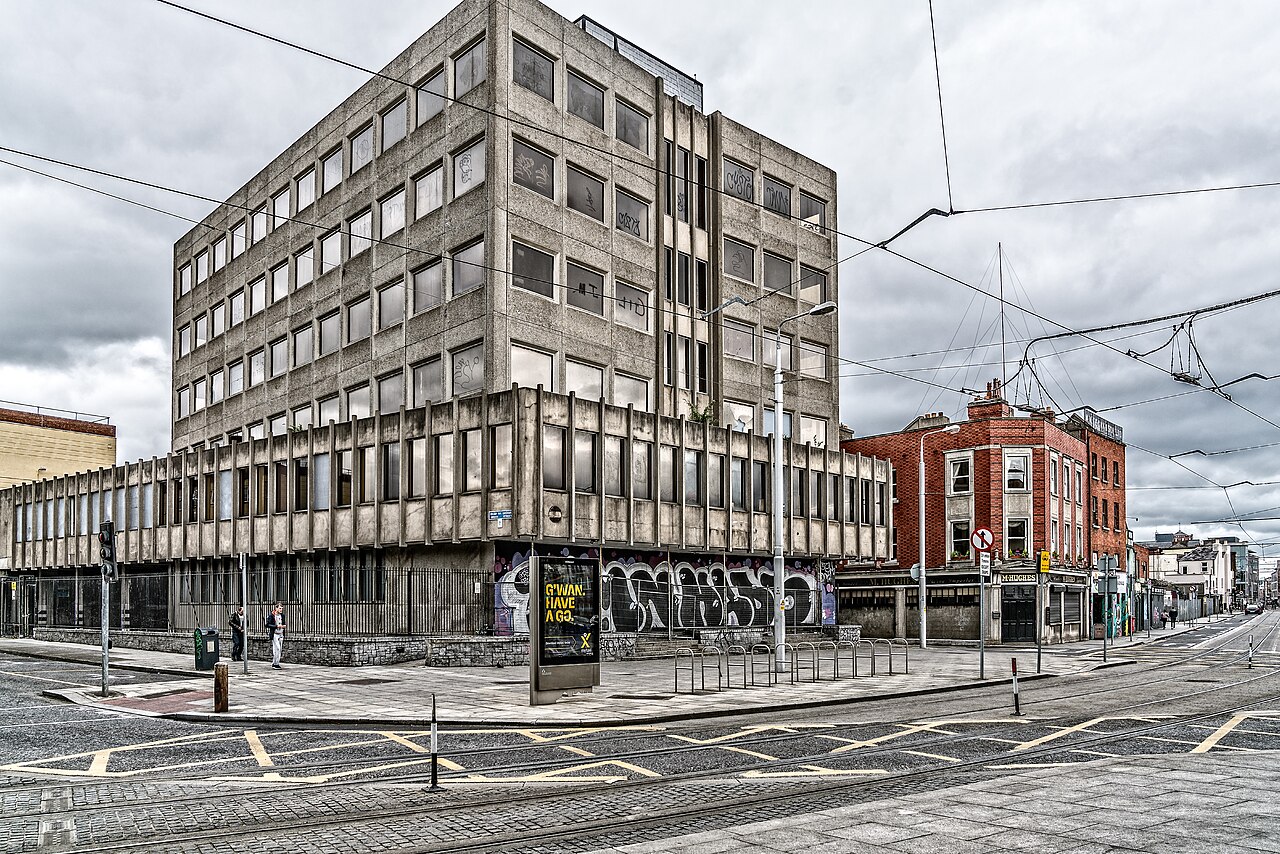
The History of Notorious Bull Lane, 1748-1885
The site of Bull Lane, off Chancery Street (formerly Pill Lane), via Wikipedia. The image dates from a few years back, when the old Motor Tax Office was still in place. Bull Lane comprised the eastern portion of this building, the western portion of Hughes’ Pub next door, and the…
-
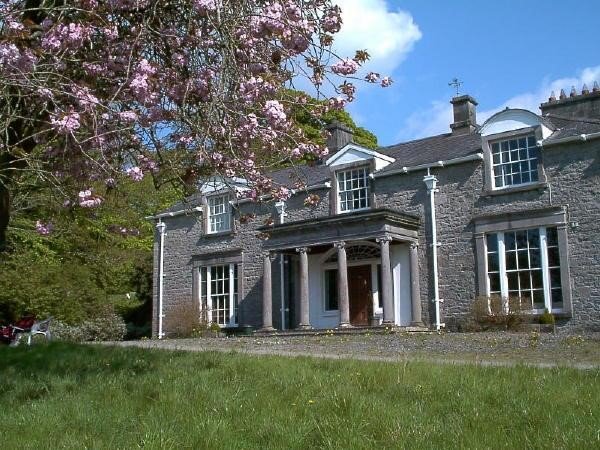
The Somervilles of Ross House: A Question of Legitimacy, 1905
Ross House, Mountnugent, County Cavan, Ireland (not in County Meath, as stated in the news report below), where army officer and huntsman James Somerville lived with Mary Anne Clarke and their children. It is now an equestrian centre – something of which Captain Somerville would surely have approved! From the…
-
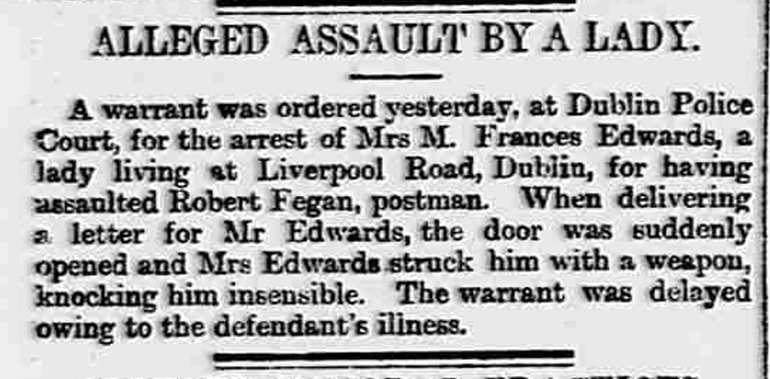
Tales from the Dublin Police Court: Lady of the House Prosecuted for Striking Postman with Blunt Implement, 1886
One of the many classic stories from the Dublin Police Court behind the Four Courts, Dublin, Ireland, as reported in the Aberdeen Express, 17 February 1886. Liverpool Road was the original name of what is now Portobello Road, Dublin. It was changed due to ‘unsavoury associations.’
-
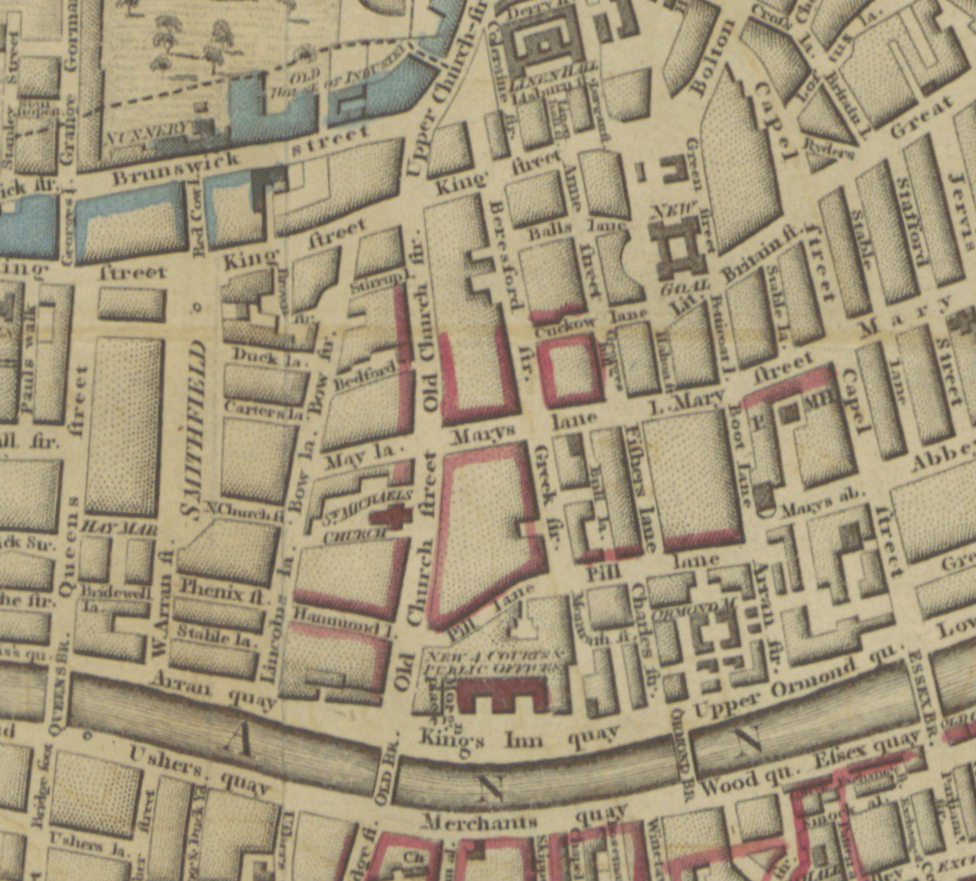
The Immediate Surroundings of Gandon’s Original Four Courts, 1798
The Modern Plan of the City of Dublin (1798) may have been the first to show Ireland’s Four Courts, formally opened in 1796. It can be seen from the extract shown above that the original Four Courts building designed by James Gandon was relatively small compared to the size of…
-
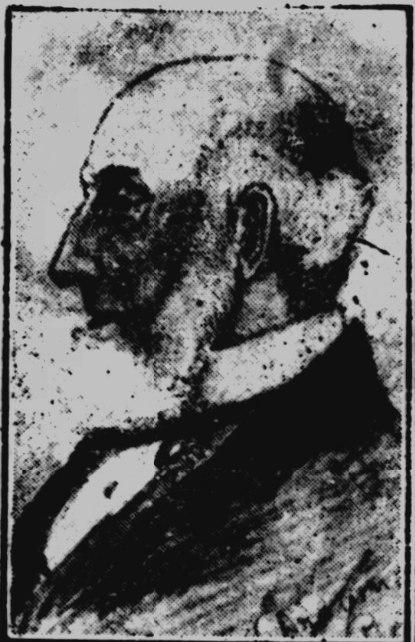
Recollections of a Very Senior Tipstaff, 1817-1915
From the Dublin Evening Telegraph, 13 November 1915, this obituary of Michael Fitzpatrick, Senior Tipstaff at the Four Courts, along with the above sketch: “FOUR COURTS OFFICIAL NOTABLE PERSONAGE DEAD Last night Mr Michael Fitzpatrick, Senior Tipstaff at the Four Courts, died at his residence, 7 Leo street. The announcement…
-

A Ballad Singer’s Christmas Release, 1857
From the Dublin Weekly Nation, Saturday 19th December 1857, this report of a ballad singer incarcerated over Christmas for singing a rebel song, before being released on Christmas Eve thanks to the kindness of Irishmen living abroad: “WEXFORD PETTY SESSIONS – WEDNESDAY, DEC 9 Magistrates on the bench: Le Hunte…
-
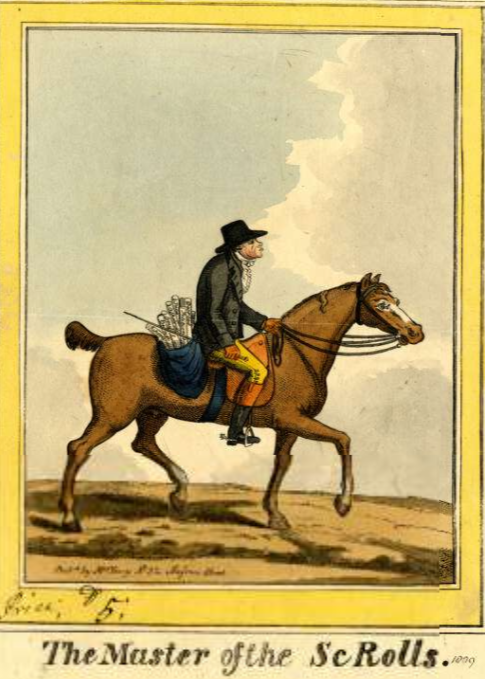
A Horse and his Barrister, 1797
The special nature of the relationship between an 18th century Irish barrister and his horse is illustrated by the above satirical print of John Philpot Curran, later Master of the Rolls, who went the Munster Circuit twice a year for many years, carrying his briefs in his saddle bag. The…
-
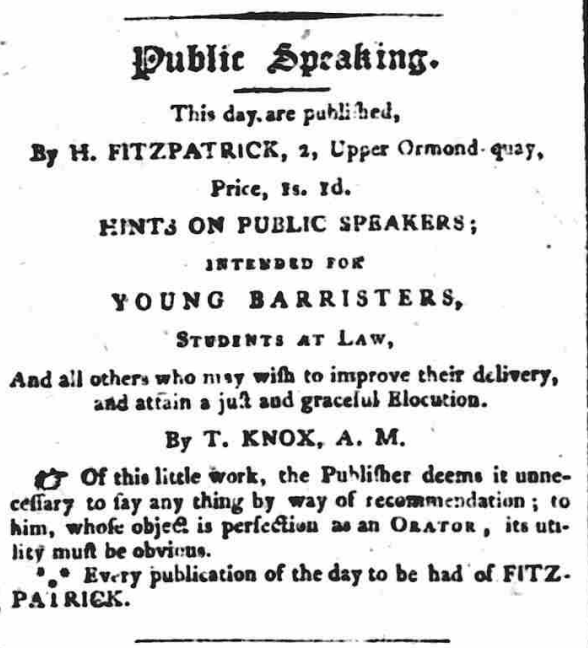
A Public Speaking Manual for the Young Irish Barrister, 1796
Perfection as an orator was the goal for any self-respecting barrister in the newly opened Four Courts of 1796. Tyros who wanted advice on how to achieve this could start by acquiring Knox’s ‘Hints on Public Speaking’ from Fitzpatrick’s bookshop on nearby Ormond Quay for just over one shilling…
-
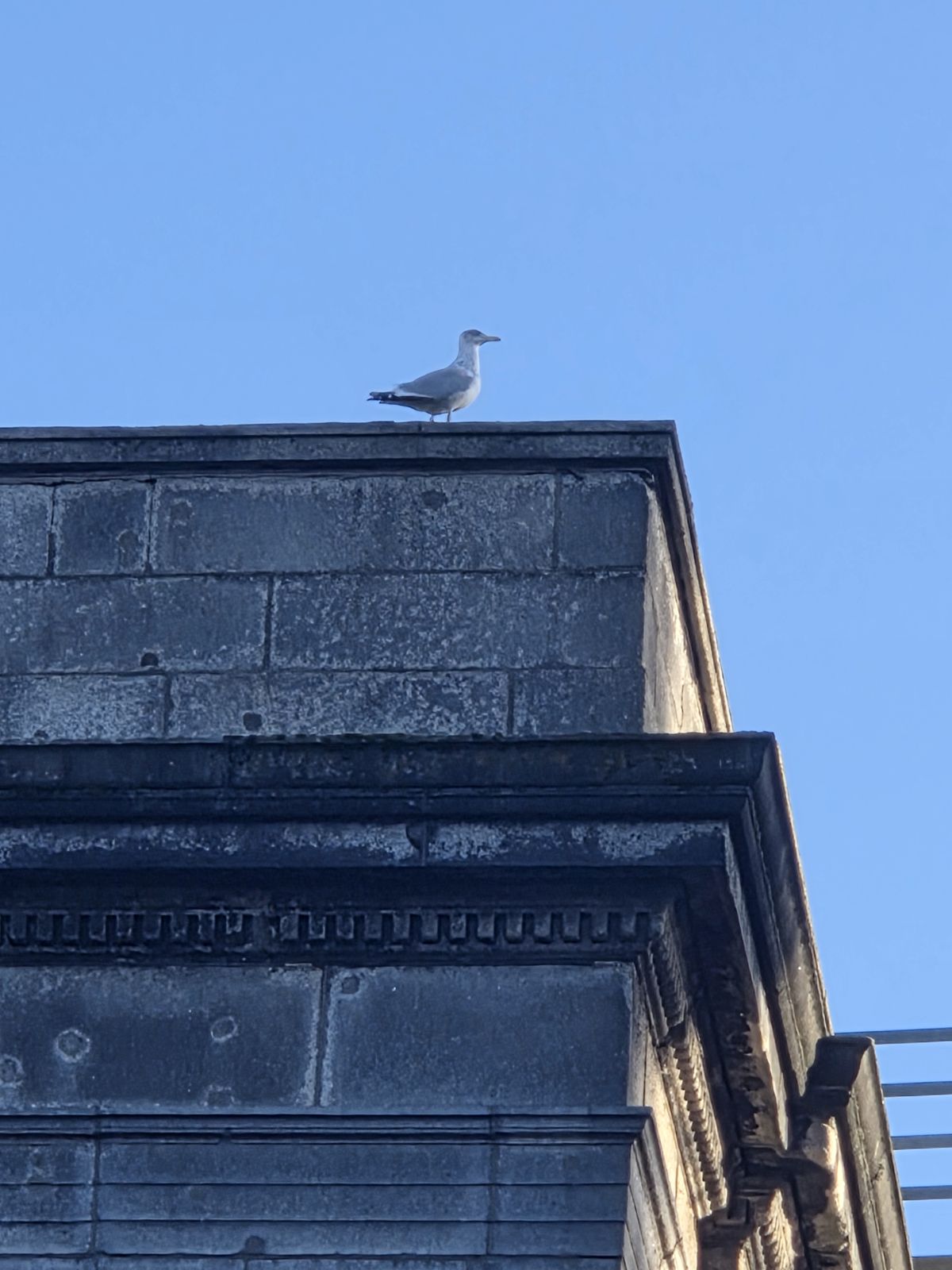
Seagulls Go Crazy During the Battle of the Four Courts, 1922
The seagulls at the Four Courts, Dublin, Ireland, have always had a tendency to swoop on its human inhabitants (see video above), but the fighting there during the Civil War of 1922 provoked the gulls to screaming, window-thumping heights reminiscent of Hitchcock’s ‘The Birds’. The movie was based on a…
-

Before the King’s Inns, 1539-1802
The park of the Honourable Society of the King’s Inns, Dublin, Ireland, at night, when it is easy to imagine it as it once was. From the Irish Builder and Engineer, June 15, 1893, this fascinating account of a pleasant park on the banks of the Bradogue river, where Henrietta…
-
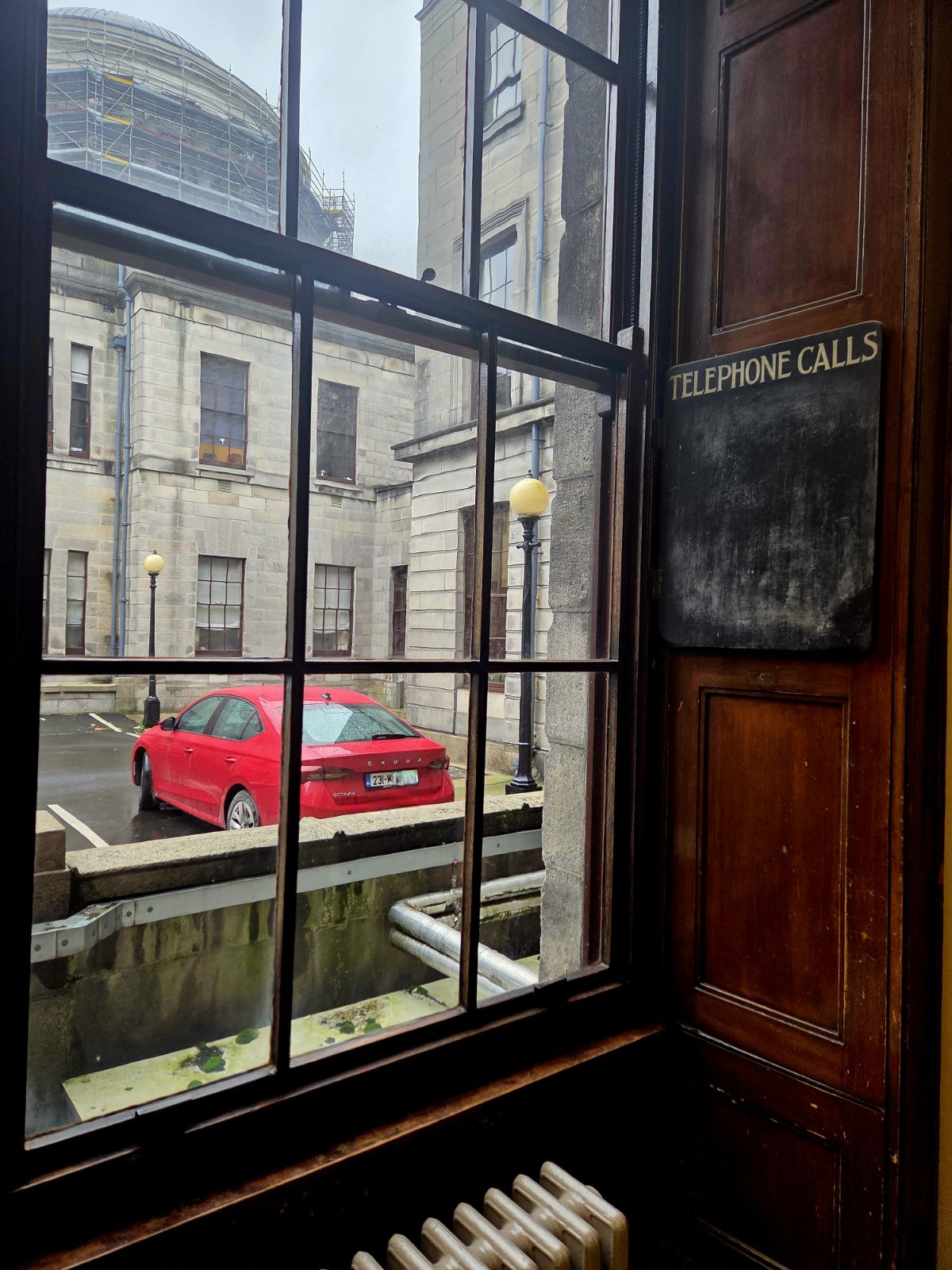
Jurors Disappointed to Discover First Four Courts’ Telephone Solicitors-Only, 1886
An interesting story from the Irish Times of 4th June 1886 recording what seems to have been the first telephone in the Four Courts, Dublin, Ireland, installed by the Incorporated Law Society of Ireland at some point in the mid-1880s, and zealously guarded by its members: “THE TELEPHONE IN THE…
-

Solicitor Challenges Isaac Butt QC to Duel over Remarks Made in Bigamy Trial, 1846
From the Annual Register of World Events, this account of a remarkable bigamy trial (or trials) in the Dublin Commission Court in 1846, culminating in a challenge to a duel issued by the prosecution solicitor to leading defence counsel. In the past, this would have resulted in one or possibly…
-
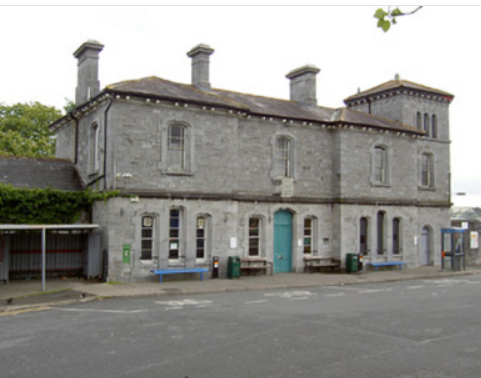
Irish Judges Express Gratitude to Locomotive Inspector’s Wife for Repast at Clonmel Station, 1898
From the Kerry News, 21 June 1898, this heartwarming story of a kindness shown by locomotive inspector’s wife Mrs Daniel Leahy, of Clonmel, to two elderly judges who found themselves detained at the town’s station (image above) due to unspecified railway difficulties. Railway travel had made things considerably easier for…
-

Irish Bar Offers Free Legal Aid to Under-10 Charged with Stealing Loaf of Bread, 1806
From the Belfast Commercial Chronicle, 19 February 1806: “At an adjournment of the quarter sessions of Kilmainham, held on Friday, Mrs Bryan, from the Rock, prosecuted a boy under ten years of age, exhibiting all the miseries which an apparent good appetite, without the means of gratifying it, could portray,…
-

Four Courts Housekeeper Breaks Statue, Falls in Love with Workman Who Helps Mend It, 1889
The Evening Irish Times of 11 October 1904 featured an article complaining about the condition of the statue of Sir Michael O’Loghlen in the Round Hall of the Four Courts. The statue had originally depicted the famous barrister and judge in a seated position holding a scroll; the Times noted…
-
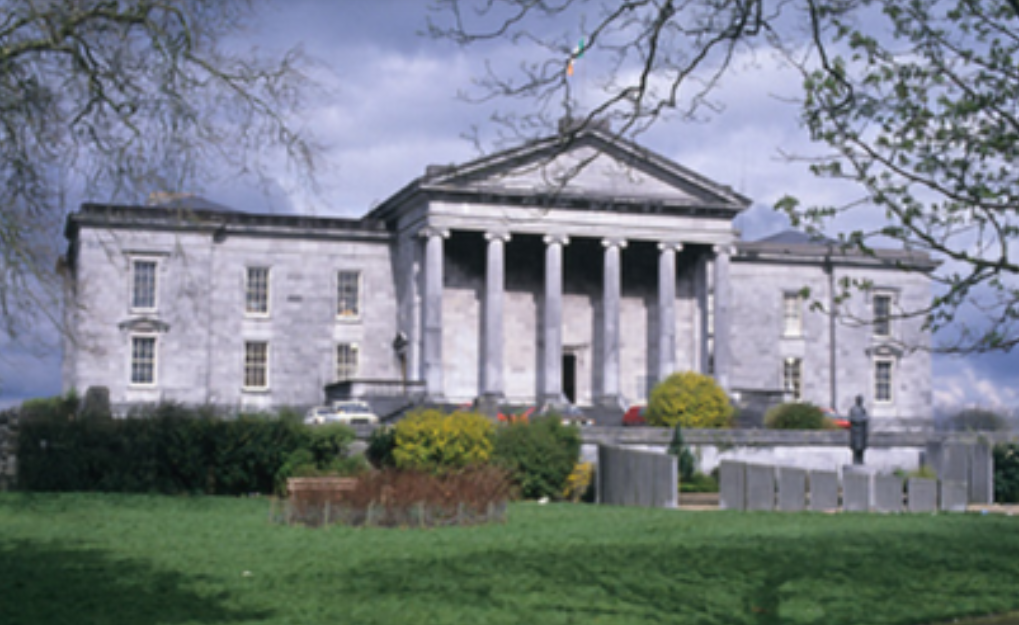
Council Members Object to Re-Upholstering of Barristers’ Benches in Ennis Courthouse, 1949
From the Herald (Dublin), 16 April 1949, an interesting reaction of some members of Clare County Council to a suggestion by the then County Registrar that lawyers’ benches in Ennis Courthouse (image above, via Buildings of Ireland) be re-upholstered. “HARD SEATS FOR COUNCIL: SOFT SEATS FOR COUNSEL‘Herald’ Staff Reporter When the…
-

Irish Solicitor Extols Youthful Handsomeness of Newly Appointed Judge, 1946
From the Galway Advertiser, 4 April 1946, this account of a heartfelt welcome accorded to former barrister and Circuit Court judge Cahir Davitt, son of 19th century Land Reform activist Michael Davitt, on his first appearance in Tullamore following his elevation to the High Court bench: “WELCOME FOR JUDGEMr Justice…
-
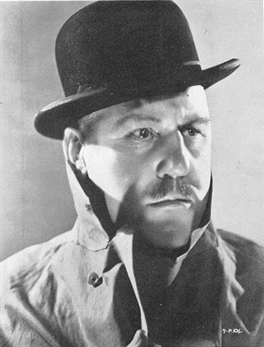
From the Irish Bar to the Silver Screen: Movie Star Edward Lexy
The below article from the Irish Weekly Independent of 15 October 1949 recounts an unprecedented leap from the Law Library to the silver screen of Irish barrister and movie star Edward George Little, better known by his stage name Edward Lexy (1897-1970). Lexy, a gifted comedian, went on to a…
-
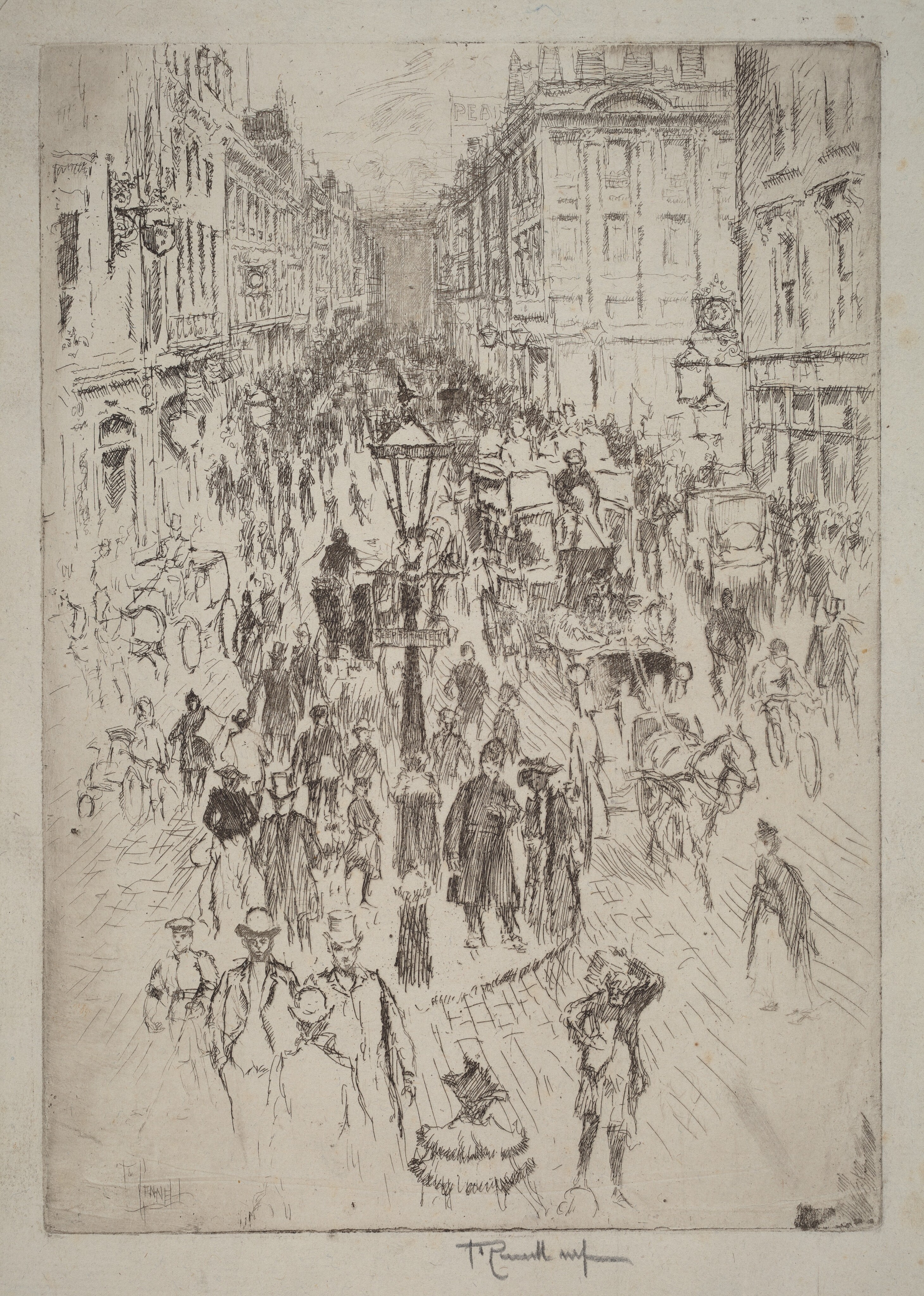
Irish Lawyer On Holiday Mistakes Thief for Old College Chum, Loses Watch, 1907
Image of New Oxford Street, London, 1897 by Joseph Pennell, via the National Gallery of Art Irish lawyers of the late 19th century were indefatigable travellers, always back and forth to London on the mailboat and train in and out of term. London was, however, a strange city, where, unlike Dublin,…
-
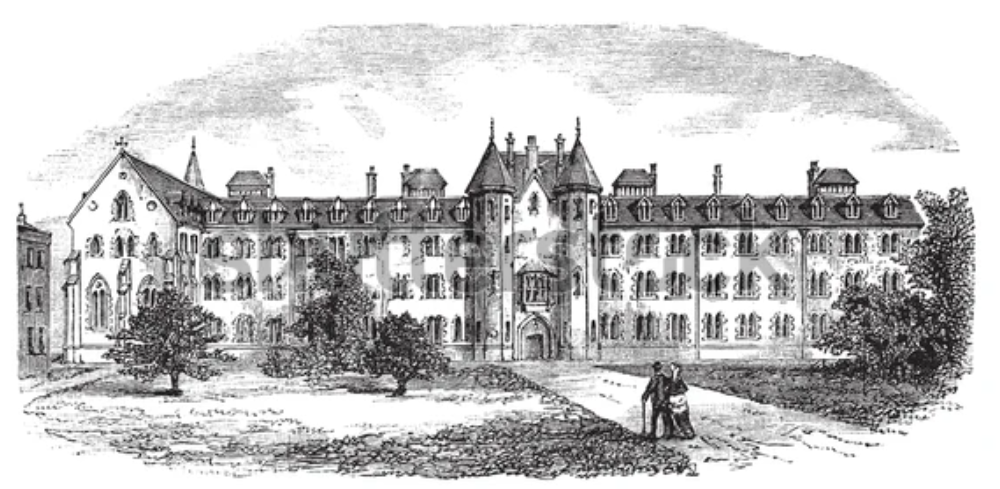
Hurt Feelings After One Irish Judge Outpuns Another, c.1810
Irish judges of old were known for, and possibly even selected on the basis of, their punning skills, finely honed with expert precision to reflect the most current talking points of the time. The rise of Catholicism in early 19th century Ireland was one such talking point, and the increasing presence…
-
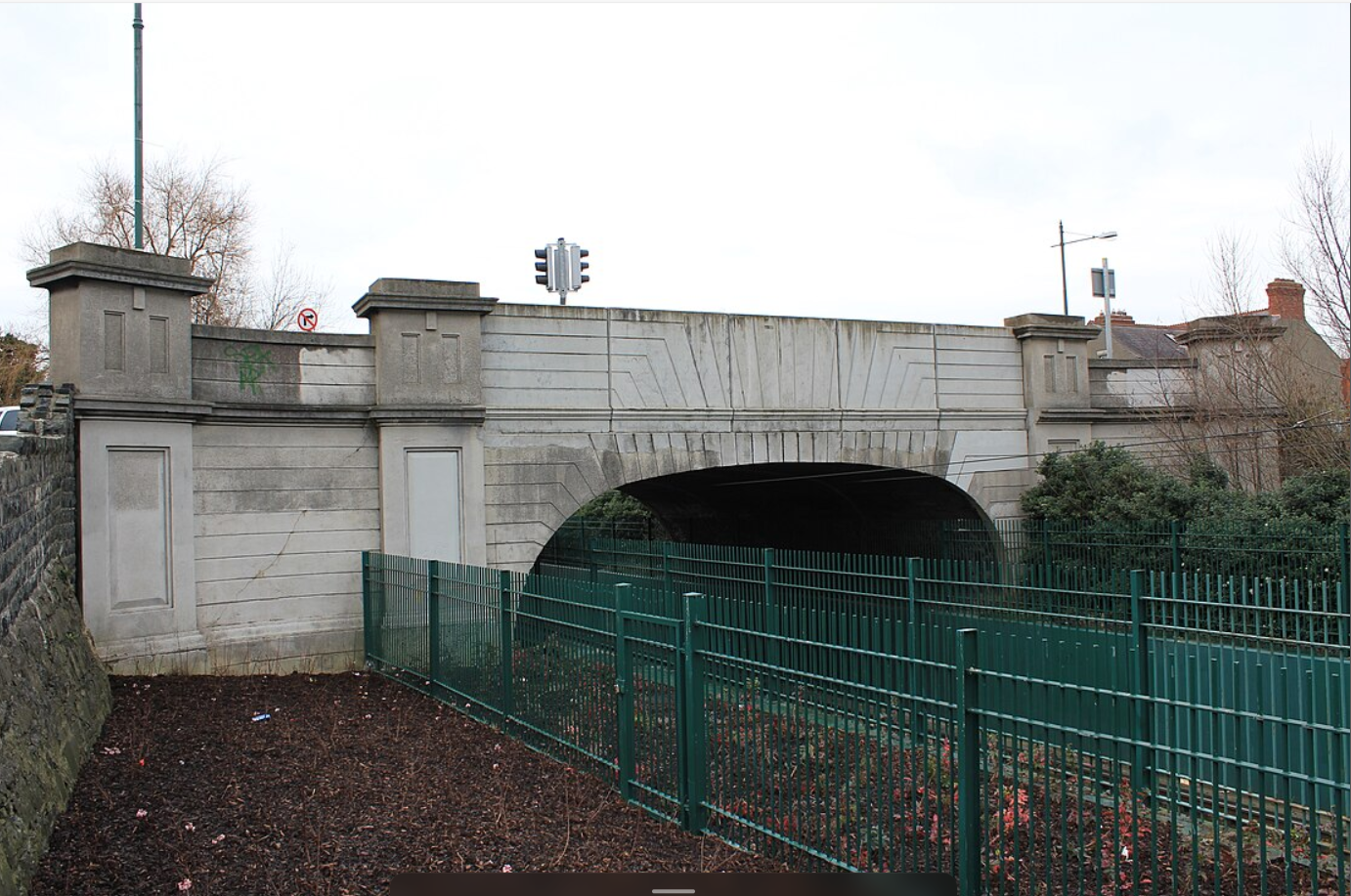
A Brother’s Revenge, 1878
Tragedy turns to violence in the Dublin Coroner’s court in this story from the Strathearn Herald of 11 May 1878. Anne Lynch, a servant who committed suicide by drowning herself in the Grand Canal at Rialto (otherwise Harcourt) Bridge, had left a note stating that she had done so due…
-

Anyone for Tennis? Irish Solicitor Competes in Davis Cup, 1936
From the Sphere, 23 May 1936, this photograph of Irish solicitor TG (‘George’) McVeagh competing in the Davis Cup of the same year. The firm established by him in Kildare Street survived well into this century. By the early 20th century many Irish lawyers had forsaken bloodsport for ball games,…
-
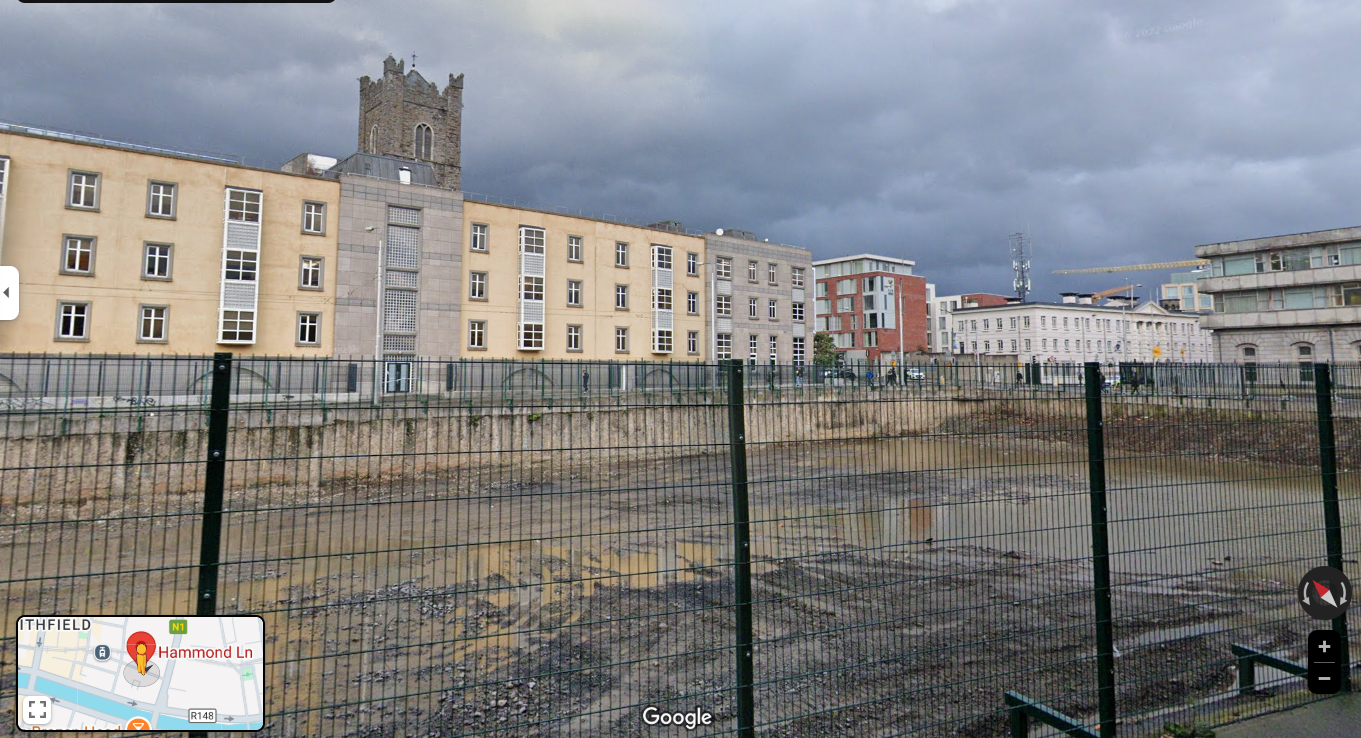
Some Nineteenth-Century Inhabitants of 167-9 Church Street, Dublin
In this post we travel back in time to look at the 19th century history of the site 167-169 Church Street, Dublin, the intended site of the new Family Law Courts. Back in the glory days of Smithfield, this site formed part of the townhouse and gardens of the General Surveyor of…
-

Midnight Vocalism Near Monto Lands Barrister in Dublin Police Court, 1887
From the Freeman’s Journal, 9 December 1887: “THE PENALTY OF MIDNIGHT VOCALISM Yesterday, in the Northern Division of the Police Court, Mr O’Donel presiding, Charles Dunne, barrister, 14 Haddington road; Arthur Sommers, doctor, 6 Clyde road, Joseph Johnstone, 5 South Circular road, clerk; and John Wilson, 25 Synge Street, student,…
-

An Extremely Long-Lived Court Crier, 1909
From the Westmeath Independent, 30 January 1909: “COURT CRIER FOR 75 YEARS A notable personality in the form of Mr Condy Boyle, Dungloe, Co Donegal has recently passed away. He was close on 100 years old, and had been court crier at Donegal Quarter Sessions for over 75 years, and…
-
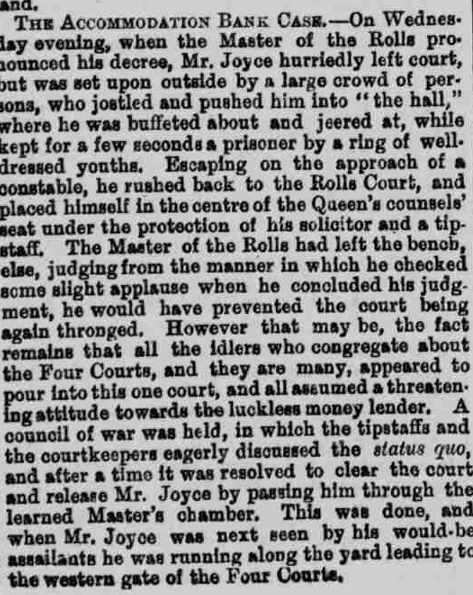
Notorious Moneylender Flees Four Courts to Escape Angry Crowd, 1879
Drama in the Four Courts as an unfortunate moneylender only narrowly escapes an angry crowd, beautifully recounted by the Northern Constitution of 17 May 1879. Thomas Joyce, through his vehicle, ‘The Accommodation Bank,’ had been lending money at 155% interest and then swiftly seizing the goods of defaulters, including a…
-
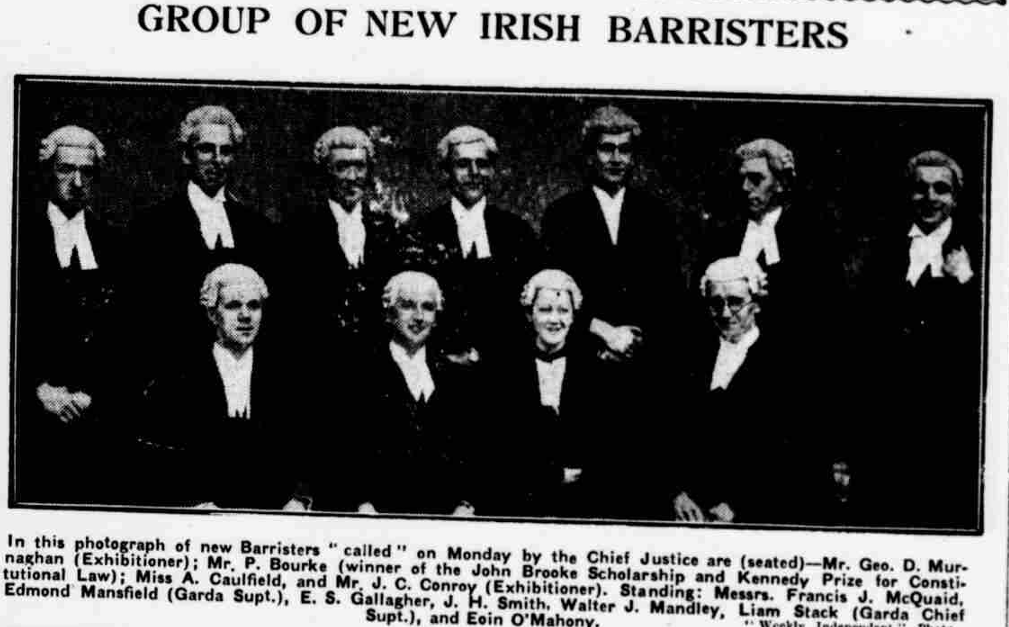
New Irish Barristers, November 1930
From the Irish Independent, 8 November 1930, a very nice-looking group of new Irish barristers, including one woman (A Caulfield) as well as two members of the Gardai: a Superintendent and Chief Superintendent. Exhibitioner George Daniel Murnaghan (far left) later became a formidable High Court judge, and is remembered for…
-

‘Miss Flite’ in Real Life, 1910-1914
From the Irish Independent, 30 April 1910, this account of the character of ‘Miss Flite,’ from Dickens’ ‘Bleak House,’ as encountered by English and Irish lawyers and judges in real life: “MISS FLITE AND MISS FLIGHTBusy as the world is over the triumphs of flight, a journal of high repute and literary interests…
-
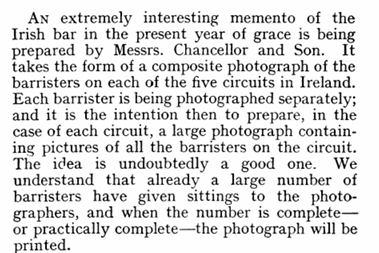
Photographing the Circuits, 1904
Irish barristers don’t just practice in Dublin – they also practice around the country. Circuit practice has always been a feature of the Irish Bar. The actual Circuits and their names have changed over the years – once upon a time there was a Munster Circuit, a Home Circuit, a…
-

Miler’s Sabbath Caresses of the Four Courts Railings, c.1900
From Robert Gahan’s wonderful article ‘Old Street Characters of Dublin,’ published in Vol 2 No 3 of the Dublin Historical Record (March 1940), this gentle and poignant account of the obsessive-compulsive ballad-singer Miler, one of several non-legal eccentrics associated with the historic Four Courts: “Let us now listen for a moment to…
-

Excitement at the Four Courts for the Bottle Riot Trial, 1823
An evocative description of the Four Courts on the first day of the trial of Henry Handwich and others for conspiracy to assault the Lord Lieutenant of Ireland may be found in the Belfast News-Letter of 7 February 1823: “At an early hour the avenues in the Four Courts exhibited…
-
Future Lord Chancellor of Ireland Brings Proceedings Over Allegations Relating to his Prosecution of Robert Emmet, 1812
From the Belfast News-Letter, 28 January 1812, this account of proceedings for criminal libel initiated by barrister and later Lord Chancellor of Ireland William Conyngham Plunket against Gilbert and Hodges, booksellers, for sale of a publication which asserted that he had acted improperly in his prosecution of Irish revolutionary Robert Emmet: “Mr Burrowes…
-
When a Defence Goes Awry: The Cork Slander Case of 1908-9
From the Free Press (Wexford) 25 July 1908: “FAMOUS COUNSEL ‘DISHED’ : MR JH CAMPBELL, KC AND THE COLONEL In the course of the hearing of a sensational slander action in Cork on Wednesday, in which the Hon. Alexis Roche, Lord Fermoy’s brother, is seeking £5000 damages from Sir Timothy…
-
No Cleaning of Streets for Carlow Assizes after ‘Uncalled for’ Judicial Remarks about the Condition of the Town, 1887
In the 19th and early 20th centuries, Irish High Court judges went on assizes to each county several times a year to hear cases, often being met by brass bands, the town mayor etc. on their arrival. It was customary for the judge at the start of the Assize sitting…
-
The Man Who Decided the Location of the Four Courts, 1773-1783
The above gentleman, Welbore Ellis MP, was the person ultimately responsible for deciding the location of today’s Four Courts, Dublin. In so doing, he was motivated primarily by the possibility of personal profit. By the 1770s, all were agreed that the old Four Courts in Christchurch were no longer suitable.…
-
A Police Chase at the Back of the Four Courts, 1893
From the Dublin Evening Telegraph, 15 May 1893: “BOLTED FROM THE POLICE COURTS Run to Earth by Detective Stratford. This afternoon the ordinary prosaic procedure of the Police Courts had somewhat a novel variation. It is not every day that a prisoner bolts from the custody of the police, but…
-
Irish Barrister and Politician Daniel O’Connell Successfully Mediates Challenge to Arms between Two Eminent Members of the Irish Bar, 1825
As published in the Leinster Reporter, 30 July 1921, an extract from ‘The Early History of Birr’ by barrister Thomas Lalor Cooke, detailing the intervention of Irish barrister and politician Daniel O’Connell to resolve a heated and potentially fatal challenge to arms between the mature and seasoned Robert Holmes, barrister, and a colleague, Christopher Antisell: “About…
-
An Attorney of Chancery Lane, Dublin, c.1820
From the pen of ‘H’ or ‘one who knew the city when he was a boy,’ as published in the Irish Builder, 15 June 1879, this Dickensian account of one of the more disreputable of the attorneys located in Chancery Lane, near Christchurch, who had found their home there during…
-
A Judge May Fish: The Riverside Exploits of T.C. Kingsmill Moore, 1900-1960
Irish Supreme Court judge Theodore Conyingham Kingsmill Moore and his family at the College Races, Trinity Week, from the Tatler, 5 June 1952. In addition to his legal achievements, Judge Kingsmill Moore was the author of the noted publication, ‘A Man May Fish,’ (1960) a classic to this day due to its…
-
Taken for a Ride: Distinguished Lawyer Unwittingly Books Hackney Cab Drawn by his own Double-Jobbing Horse, 1856
Travel back to the roguish Dublin of times past with this tale of a distinguished Irish lawyer, who one day took a hackney car from the Four Courts only to find out that it was being pulled by his very own carriage horse, hired out by his errant coachman without…
-
Barrister Aggrieved by Judge Deciding in His Favour Without Hearing him, c. 1843
As all barristers will know, the dreaded event of ‘not being heard’ occurs when they are not allowed to address the court (new barristers often take the words ‘I cannot hear you’ literally, and speak louder!). There are various reasons why a judge may refuse to hear a barrister, possibly…
-
Curate of St Michan’s Pelted with Vegetables for Alleged ‘Souping’, 1860
From the Dublin Evening Mail, 22 August 1860, this interesting vignette from Church Street, Dublin, close to the Four Courts, when a crowd gathered to abuse the local Protestant curate, Mr Andrews, for alleged souperising of Catholics – a charge he vehemently denied: “DUBLIN POLICE – MONDAY AUGUST 20 CAPEL-STREET OFFICE Christopher…
-
Only Irish Catholic to Practice as Barrister During Penal Laws Undone by his own Free Legal Advice, c.1700
The risks of giving free legal advice are manifold, but never better illustrated than by this story from the Sligo Champion of 28 July 1945 regarding a famous Sligo barrister whose helpful recommendation to a servant was used against him in the most memorable way! The barrister in question, Counsellor…
-
Catholic Conveyancers, 1700-1800
From the wonderful ‘Anecdotes of the Connaught Circuit’ by Oliver Joseph Burke, this interesting reference to the ‘Catholic conveyancers’ of the 18th and early 19th century. Excluded from the Bar by reason of their religion, many 18th century Catholics in both Ireland and England chose to study at the Inns…
-
Before the Four Courts: The Public Offices on Inns Quay, c. 1780
The building we now know as the Four Courts as it was originally meant to be – a building housing offices for the courts rather than the courts themselves, and public records. An extended version of this original design is believed to have been nearly complete when its architect Thomas…
-
All This is Art: The Advocacy Skills of Charles Kendal Bushe, 1805-1822
Much to admire in this polished profile of the advocacy skills of Lord Chief Justice of Ireland Charles Kendal Bushe, known in his time as ‘the silver-tongued.’ It was written by his colleague John Finlay when Bushe was Solicitor-General of Ireland and republished in Finlay’s Miscellanies (1835): “Ireland has produced…
-
Chief Baron Palles Demands Respect from his Court, 1903
A court is not a theatre, and you will be removed – so declared legendary Irish judge Christopher Palles in 1903 when an unidentified woman in a blue dress clapped during a case in his court. See account below. Although mid 19th century Ireland was approvingly noted by some commentators for its…
-
Barrister Dies of Apoplexy After Visit to Turkish Bath, 1865
An interesting news clipping from the Warder and Dublin Weekly Mail, 24 June 1865, detailing an inquest into the death of barrister Edward Johnstone following an after-court visit to the Turkish Baths in Lincoln Place, Dublin. The Turkish Baths (image above, from the 1860s, via Wikipedia) were a key feature of late…
-
The New Fish and Vegetable Market in Halston Street, 1892
From the Dublin Evening Telegraph, 5th September 1892, this account of the new Fish and Vegetable Market close to the Four Courts in Halston Street, due to be formally opened the following day, with accompanying pen and ink illustrations (slideshow above). The article gives a useful account of the history leading…
-
The Lord Chancellor’s State Coach, 1790-1938
How Ireland’s top judge used to travel – the State Coach of the unpopular 18th century Lord Chancellor of Ireland, John FitzGibbon, first Earl of Clare, as described in the Lurgan Mail, 5 March 1932. The coach is now in the National Museum of Ireland, Collins Barracks. In fairness, Lord Clare himself…
-
The Four Courts, as Depicted in Shell’s ‘Everywhere You Go’ Series, 1932
This 1932 poster for Shell Oil, part of its ‘Everywhere You Go’ series, features a beautiful depiction of the Liffey and Inns Quay and Ormond Quay, Dublin, with the dome of the newly reconstructed Four Courts in the background. The artist may have been Henry C O’Donnell. Image via Mutual…
-
Enough Light to Pierce an Eye, 1888
A wonderful image of the Wellington Quay premises of Joseph Dollard, lithographer, letter-press printer and account-book maker, from the late 19th century publication ”The Industries of Dublin’ which described it as “a noble building… constructed in 1888 for the wholesale and retail sale of the many celebrated papers and other…
-
Attorney’s Apprentice Resists Suggestion of Twice-Weekly ‘Searching Examinations,’ 1873
For over half a century, until the destruction of the Four Courts in 1922, the Society of Attorneys and Solicitors provided legal education for apprentices in a purpose built lecture theatre in the former Solicitor’s Building in the Four Courts (now the Law Library). As always, it was impossible to…
-
Anecdotes of a Lord Chief Justice of Ireland, by his Literary Great-Granddaughters, 1932
Between the leaves of ‘An Incorruptible Irishman, Being an Account of Chief Justice Charles Kendal Bushe, and of his wife, Nancy Crompton, and their Times 1767-1843,’ written by his great-granddaughters Edith Somerville and Martin Ross, better known as authors of ‘The Irish RM’, may be found the following fascinating anecdote,…
-
Best Friend Breakup, 1929
From the Irish Independent, 20 July 1929, this salutary tale of a best friendship gone to the bad. Although there is no specific genre of law devoted to this topic, one suspects that broken friendships have provoked as much litigation as broken marriages over the years. An interesting side note…
-
Then and Now: Hammond Lane, 1916 and 2025
Looking down Hammond Lane, Dublin 7, to the dome of the Four Courts, then and now. First image from 1916, via the Bureau of Military History. Second image from Google Streetview. Hammond Lane was originally the route taken by condemned persons to be hanged by the gibbet at the river at Stoneybatter.…
-
An Irish Barrister’s Divorce, 1907
The procedure for Irish couples divorcing and remarrying in the late 19th and early 20th century is illustrated by 1907 divorce proceedings in Dublin and Westminster brought by an Irish sporting barrister, Henry Morgan Byrne against his errant wife Laura (above left), first muse of William Butler Yeats later famous…
-
‘Patrick Whack’ Visits the Four Courts, 1872
The above poem is from the publication ‘Zozimus,’ 16 March 1872. Persons referred to therein include Judge William Nicholas Keogh, barrister and politician Isaac Butt, barristers Francis McDonogh and Richard Armstrong and John Rea, solicitor. The references to ‘the divvle’s house’ and bees in the last verse pay homage to the popular Dublin description of the Four…
-
The Story of the Brothers Sheares, 1798
From the Weekly Freeman’s Journal, 16 March 1918, this gripping illustrated account by Ada Peters (abridged) of the betrayal and trial of John and Henry Sheares, two Irish barristers executed for treason following the 1798 Rebellion. “A Tragedy of Patriotism It was a day in May, the sun shone pleasantly, and the promise…
-
Averil Deverell BL and the Bray Intestacy Dispute, 1932
From the Wicklow People, 12 November 1932, a report of pioneering Irish woman barrister Averil Deverell BL appearing in a family property dispute about ownership of the Laurels, Greenpark Road, Bray, County Wicklow. The legal owner of the Laurels, Mary Josephine Barry, had died without a will, and under the rules of…
-
Cashing in the Chips, 1923
From the Daily News (London), 10 July 1923, this story of a distinctly fishy series of events whereby an unnamed Irish solicitor’s advertisement for heirs to an estate came to the notice of the Scottish family concerned – a true story, no codding! Top Image Credit
-
The Degeneracy of the Young Irish Bar, 1853
From the Irish Quarterly Review, republished in the Dublin Evening Mail of 6 April 1853, a stinging reproof of the young Irish Bar as a bunch of degenerate, effeminate dandies and fops prioritising fashion, gossip and the Polka above learning and advocacy. If this decline in standards did in fact…
-
Trinity College Italian Professor Sacked for Illiteracy Sues Colleagues for Defamation, 1856
From the Cork Constitution, 7 August 1856: “THE TRINITY COLLEGE ITALIAN PROFESSOR (From the Daily News) A singular case, not unlikely to be numbered among the cause célèbres, has just been tried at the summer assizes in the County of Kildare. We believe a few particulars may not be found…
-
Judicial Dinner Parties at Fitzwilliam Square, 1850s-1870s
Dublin the period 1850 to 1870, Fitzwilliam Square, Dublin, was the locale of fabled dinner parties hosted by widowed James Henry Monahan, Lord Chief Justice of the Common Pleas, and his four attractive daughters. The Monahans, ‘a sprightly and accomplished family,’ lived at No. 5 Fitzwilliam Square East. View it here. According to…
-
Barrister Sues Solicitor for Alleging that He Acted for a Landlord Evicting a Tenant, 1910
From the Irish Times, 15 January 1910, this account of an interesting action brought by barrister and politician Tim Healy under the Corrupt and Illegal Practices Prevention Act 1883, which as amended by a subsequent Act of 1895, stated as follows: “Any person who…before or during any parliamentary election, shall, for the…
-
Would-Be Visitor to Eamon De Valera Sets Fire to Padded Cell in Bridewell Garda Station, 1929
From the Irish Independent, 9th March 1929, this remarkable story about a young man, with an asserted connection to Irish politician Éamon de Valera, who set fire to the padded cell in the Bridewell Garda station behind the Four Courts – the only reported person to have done so to…
-
The Chief Justice at Bodenstown, 1924
Chief Justice of the Irish Free State Hugh Kennedy and Attorney-General John O’Byrne (later Mr Justice O’Byrne) arriving with their spouses at the 1924 Bodenstown ceremony to commemorate Irish barrister Wolfe Tone who had pre-exempted by suicide execution for his part in the 1798 Rebellion. In 1913 another Irish barrister, Patrick Pearse, had delivered a significant address at…
-
Irish Judge Marries Mistress on Instructions from their Shotgun-Wielding Son, c.1810
A fascinating story from the Kerry Reporter of 2 February, 1907, about an early 19th century Irish judge forced to marry his mistress in a shotgun wedding. Then, as now, they do things differently in Kerry, and the gun in question was owned by the couple’s son, who had been…
-
A Fox-Hunting Solicitor, c.1925
Irish solicitor John Gore-Grimes, fox-hunting at Tallaght, when it was still fields, c. 1925. Zoom in here. Also in the image is noted Irish equestrian Molly Morgan Byrne, daughter of Irish barrister Henry Morgan Byrne, who recovered from a broken neck at Fairyhouse to divorce his first wife and marry Molly’s…
-
‘A Character if There Ever Was One’: Law Library Crier John Campion, 1892-1949
To understand the significance of the above piece from the Dublin Evening Telegraph of 9 February 1915 , you would need to know that the Law Library of the time had a notice board on which the whereabouts of each barrister in the Four Courts that day was written down. …
-
‘She Drank Something out of a Bottle’: Teenager Charged with Attempted Suicide after Family Row at 7 Inns Quay, 1927
Long replaced by Aras Ui Dhalaigh, it is easy to forget that there were once families living in the houses adjacent to the west wing of the Four Courts shown in the image above, a zoomable version of which, startling in its clarity, is available to view on the website of…
-
Moral Courage Triumphs as Irish Barrister Risks Career to Successfully Defend Rebel Brother, 1798
Another story to add to the annals of the Irish Bar and the 1798 Rebellion. From the Irish Weekly and Ulster Examiner, 3 April 1920, a ballad-worthy account of an Irish barrister who, during the dark days following the 1798 Rebellion, puts family loyalty above his professional career to mount a successful defence…
-
Sister Act as Governess Represents Herself in Proceedings for Breach of Promise and Child Support, 1882
A fascinating account from the Cheshire Observer, 28 January 1882, of a claim for breach of promise and child support by a many-sistered governess ‘ruined’ by a member of the Stephen’s Street Club after eye-contact in Grafton Street followed by champagne at the Lincoln Place Turkish Bath Restaurant progressed to…
-
The Art of Cross-Examination, as Practised by Daniel O’Connell, 1799-1833
From the Dublin Morning Register, 4 December 1833, originally published in the Liverpool Journal, this interesting disquisition on the cross-examination skills of Irish barrister and politician Daniel O’Connell: “Of late years Mr O’Connell has been so exclusively before the public as a legislator, that he has been forgotten as a barrister.…
-
Unfit for Publication: The Criminal Conversation Case of Wilson v Webb, 1870
From the London Evening Standard, 10 December 1870: “Dublin is becoming unenviably famous for divorce and criminal conversation cases of an extraordinary nature. The recent suit of Taylor v Taylor is thrown into the shade by Wilson v Webb, now in progress. In this latter instance a member of the…
-
‘Overmanned and Overpaid’: The Underworked Irish Bench, 1856-1897
From the Donegal Independent, 18 June 1897: “THE IRISH BENCH The ‘Westminster Gazette’ says that ‘It is not to be wondered at perhaps that the Irish Bar should be anxious to preserve the ‘integrity’ of the Irish Bench, and it is without any feelings of surprise that one reads of…
-
Baron Dowse and the Saga of the Stand-Up Desk, 1871
A stand-up row about a stand-up desk between the usually genial Irish Solicitor-General Richard Dowse, later Baron Dowse of the Irish Court of Exchequer (above right), and Mr Ayrton of the Westminster Board of Works, gives us an interesting insight into the work habits of 19th century Irish barristers. The…
-
Legal Duels in the Phoenix Park, 1760-1800
From the Newcastle Courant, 12 May 1882, an article, inspired by the Phoenix Park murders, reminiscing about the blood previously spilled in that location by Irish legal duellists, including future Lord Chief Justices of the Common Pleas and King’s Bench and a future Lord Chancellor of Ireland. All the duels mentioned…
-
The Friars of St Saviour’s and the Old Bridge of Dublin, 1428
From the Evening Herald (Dublin), 5 August 1921: “Dublin city was the first place in Ireland selected for the founding of a Dominican Priory. This was the Convent of St Saviour, which stood on the site of the present Four Courts. The place was bestowed on the first colony of…
-
Death in Court: The Suicide of William Jackson, 1795
From the Leeds Times, 31 August 1867, this account, originally published in All the Year Round, of the death of the Reverend William Jackson in the Court of King’s Bench in the old Four Courts in Christchurch, just as the Chief Justice of the King’s Bench was about to pronounce…
-
Deciding on Drunkenness Pre-Breathalyser, 1914
“A person, though he knows a person is drunk, cannot sometimes explain exactly [why].” How to prove drunkenness in a pre-breathalyser era? The below case from Dungarvan Petty Sessions, reported in the Waterford Evening News of 7 January 1914, which shows a court struggling with this question, illustrates the humour…
-
Giving It His Awl: John Philpot Curran and his Scapegrace Brother, c.1800
From the Daily News (London) 28 September 1905, this story about the famous Irish advocate John Philpot Curran (above) who resided at 4 Ely Place (below). “Mr George Moore, the novelist, was presented to our readers on Monday in the engaging light of an active resister against the educational powers…
-
Driving Mr Redmond, 1910
Politics and the law coalesced in more than one respect in ‘Mr Redmond’s Furious Drive,’ a mildly scandalous story featuring the leader of the Irish Parliamentary Party and his double-jobbing barrister chauffeur, which featured in a number of Irish newspapers in September 1910. This account below is from the Irish…
-
The Four Courts We Lived In, 1847
This lovely image of the Four Courts from ‘The Land We Live in: a Pictorial and Literary Sketch-Book of the British Empire’ (1847-51) was accompanied by the following homage to the unparalleled vibrancy of the Round Hall as it once was: “Towards the other end of the quays, just above Richmond Bridge,…
-
Martyn’s ‘The Place-Hunters’: A Forgotten Play set in the Law Library of 1902
On July 28, 1902, the Dublin Leader published the entirety of a one-act play by Edward Martyn, ‘The Place-Hunters,’ set in the Law Library of the time and satirising Irish barristers’ struggle between principle on the one hand and personal benefit on the other. Characters include the idealistic nationalist barrister Hugh…
-
Laying the Foundation Stone of the New Four Courts, 1786
The ceremony of laying the foundation stone of the new Four Courts took place in May 1786 and was presided over by the Lord Lieutenant of Ireland, Charles Manners, Duke of Rutland. The below account of the ceremony from an American newspaper indicates that it was accompanied by the characteristic…
-
Mr English’s Wig-Powdering Chamber at the Old Four Courts, 1780
A 1780 advert in the Dublin Evening Post from Mr English, wig-seller, referencing his dressing room at the rear door of the old Four Courts in Christchurch, where Irish barristers of the period could get their wigs powdered daily. Although most 18th century gentlemen wore wigs, it was regarded as…
-
The Family of Mr Justice Keogh in the Shade of the Sugar Loaf, 1857
The family of William Nicholas Keogh, Judge of the Common Pleas in Ireland (1856-78), beautifully depicted by John Joseph Slattery against the backdrop of the Sugar Loaf, Wicklow in 1857. Keogh, a former M.P. as well as Q.C., suffered greatly from public opprobrium as a result of his decision to accept…
-
Former Governess’s Gentlemen’s Oyster Supper Cancelled due to Arrest for Luggage Theft, 1878-9
From the Staffordshire Sentinel of 1 November 1878, this account of 25-year-old Edith Shaw, a former governess with a taste for the high life, charged at the Dublin Commission Court with stealing passengers’ luggage at railway stations: Edith managed a number of successful thefts before she was apprehended in the…
-
‘Well Known as a Hangman’: A High-Kicking Mare, 1915
Litigation in respect of the buying and selling of horses was once a major part of the Irish legal system. Although Sport (Dublin) did not usually carry legal reports, it made an exception on 13 February 1915 in respect of the below entertaining case: “SALE OF A HORSE DONOVAN V…
-
Barrister Summonsed for Failure to Certify Cook as Honest, 1817
A tale, from the days when Irish barristers were still addressed as ‘Counsellor’, of a barrister from Dorset Street, a popular street for legal residences of the time, summonsed for failure to provide a good character for a cook who cut bits off his meat for herself The story, from…
-
The Four Courts from Usher’s Quay, c.1830
The Four Courts from Usher’s Quay, c.1830. The building on the right on the Quay is the Wellesley Market, which had opened four years previously. It consisted of 80 warerooms, and in the centre an open space to be fitted up as a public market for the sale of Irish…
-
Anonymous Letters to Judges – the Less Nice Sort, 1880
Although no one could have called 19th century Irish judges overworked, and their depth of legal knowledge varied radically, they all had one thing in common, and that was a high degree of physical courage. With the murder of Lord Chief Justice Kilwarden during the Emmet Rebellion of 1803 still…
-
Anonymous Letters to Judges – The Nicer Sort, 1895
Judge Boyd, Bankruptcy Judge, occasionally received anonymous correspondence asking for special consideration for persons due to appear before him. While such correspondence tended to be politer than most anonymous letters received by 19th century Irish judges, he exceedingly disliked these attempts to influence his decisions. Read his diatribe against such…
-
The Devil’s Cure, 1801
From the Porcupine, 18 April 1801, a harrowing story of abuse bordering on homicide by Mary Doyle, a fiend in human form whose treatment of infants procured by her from the Foundling Hospital, Dublin for money-making purposes was dreadful enough to appall even the hardened Lord Norbury: “At the Assizes in Carlow, on…
-
Judge Recommends Throwing Irish Law Reports into Liffey, 1889
From the Daily Express, 2 February 1889: “THE ACTION BY A SOLICITOR FOR SLANDER In the Exchequer Division yesterday, before the Lord Chief Baron and Mr Baron Dowse, the case of Hugh Thomas Sayers, solicitor, v Edward Ussher Quinn, JP, of Shankill, County Waterford, was again before the court. The…
-
Pilloried in Church Street, 1793
Did you know that there was a pillory opposite St Michan’s Church, Church Street, Dublin, in the late 18th century? But if you were put there for sedition, there was no rotten fruit-throwing, residents of the area being themselves of the rebellious sort. This hilarious story from the Irish Builder…
-
The Cross-Examination Technique of Isaac Butt, 1866
An interesting article from the Derbyshire Advertiser and Journal, 1 March 1866, describing the cross-examination style of 19th century Irish barrister and politician Isaac Butt, who favoured bombarding a witness under cross-examination with extremely rapid, quickfire questions: Butt regarded his controversial cross-examination style as the best way of ‘testing a…
-
The River Liffey and the Law Courts, Dublin, 1879, by J Huberts
A stunning image by J. Huberts depicting businessmen, street hawkers, local women and mounted and kilted military going about their day against the backdrop of an unrecognisable Wood Quay. Buildings, vehicles and activities may have changed, but the Four Courts, the bridges, the Wellington Monument in the distance and the…
-
A Medico-Legal Elopement, c.1827
From the Dublin Daily Express, Tuesday 19 June 1906, an account, by Mrs Power O’Donoghue, of a medico-legal elopement effected by barge along the Grand Canal, County Kildare in the early years of the 19th century: “The marriage of Lord Ninian Crichton Stuart and the Hon Ismay Preston recalls a…
-
Edmund Burke’s Birthplace at 12 Arran Quay, c.1902
This photograph of the birthplace of philosopher and statesman Edmund Burke at 12 Arran Quay, Dublin, published in the Sphere of 22 November 1902, shows the attractive shopfronts of buildings near the Four Courts a century or so ago. Burke’s father was an attorney, and Arran Quay – a very genteel location…
-
Production of Law Books in Court Viewed by Judges as an Insult, pre-1840s
Did you know that as late as the 1830s it was considered a breach of etiquette by Irish lawyers to bring text books into court, as judges were presumed to know everything in the caselaw already? See below an account of olden days from the Freeman’s Journal of 1 September…
-
Irish Legal Day and Week Shortened to Conserve Coal, 1918
As detailed in the below story from the Freeman’s Journal of 10 October 1918, coal shortages at the end of the First World War led to a shortening of the legal day in the Four Courts. Courts now finished at 3 p.m., with the break for lunch being reduced to…
-
Irish Bar Outraged as Eminent QC Rebuked by Judge for Prolixity in Closing Submissions, 1895
As the below report from the Westminster Gazette of 5 December 1895 shows, even for the very experienced practitioner, the temptation to address the court at length can be irresistible… Much has changed since 1895 but not, it seems, the unique tone of a withering judicial rebuke to counsel! To…
-
Miss Dromgoole of Pill Lane, 1887-1906
Though excluded from the courts in the absence of a dustpan or broom, save on Call Days, when they were permitted to flit like pretty butterflies through the otherwise forbidden realms of the Law Library, the vicinity of the Four Courts has always been home to women engaged in the…
-
Not What They Thought She Was, 1928
From the Fermanagh Herald of 28 January 1928, this account of the appearance before the Dublin Circuit Criminal Court in Green Street of the irredeemable Mary Knott, a ten-time convicted middle-aged fraudster of refined taste and extraordinary ingenuity. Armed with a stethoscope and claiming to be a doctor on the…
-
‘Zozimus’ on the Four Courts, 1872
As republished in the Galway Observer, 21 March 1953, a satirical article about the Four Courts from the 1870-72 publication ‘Zozimus’, published by barrister and journalist Alexander Martin Sullivan, a member of the Healy-Sullivan dynasty which included, among others, his son, Serjeant Sullivan KC, his son-in-law, High Court judge George…
-
Grandson of Lord Chief Justice Charged with Manslaughter of Child by Whip, 1851
From Douglas Jerrold’s Weekly Newspaper, 14 September 1850: “CHARGE OF MANSLAUGHTER AGAINST CAPTAIN BUSHE, OF THE 59TH REGIMENT An inquest was held at Mallow, on Friday, on the body of a respectable child, named John Dennehy, between six and seven years of age, alleged to have come by its death in…
-
Judge Kelly, 1783-1801
From the North Down Herald and County Down Independent, 2 August 1907, this extract from Jonah Barrington’s ‘Personal Sketches and Recollections of his Own Time’ describing Thomas Kelly, justice of the Common Pleas in Ireland 1783-1801: “One of the most remarkable and humane judges I ever saw upon the Irish bench…
-
The Lounge Bar at the Four Courts Hotel, 1940
The new Lounge Bar at the legendary Four Courts Hotel, Inns Quay, as it appeared in the Irish Independent of 19 October 1940. The accompanying write-up describes the hotel as ‘the favoured rendezvous of many whose name and fame have passed into history… a landmark second only to Nelson Pillar……
-
Catholic Barristers and the Irish March of Intellect, c.1820
One feature of the Irish Bar which merits highlighting is the extent to which its composition has changed radically over the past two centuries, not just in terms of the gender of its members, but as regards their religion. Catholics were excluded from the Irish Bar until the late 18th…
-
A Riotous Relic Unwrapped in the Law Library, c.1880
The 1822 Bottle Riot at the Theatre Royal, Dublin, which involved the throwing of a bottle at the Lord Lieutenant, was notable for the fact that the bottle in question did not break, but fell into the Viceregal box and – in an appropriately dramatic gesture – was raised and held…
-
Newry Solicitor’s Will Set Aside on account of Insane Delusion as to Wife’s Infidelity, 1907
From the Liverpool Echo, Friday November 29th,1907: “Remarkable Will Suit – Irish solicitor and his wife. Amazing disclosures at the Four Courts, Dublin yesterday before Mr. Justice Andrews and a special jury when the case of MacAreavey v Russell was heard to establish the will of the late J.H. Russell,…
-
The Law Library as a Solicitors Hall, pre-1922
The site of today’s Law Library in its previous incarnation as a Solicitors Hall, as published in ‘A Souvenir Album of the Dublin Fighting, 1922.’ The Solicitors Hall was used between 1840 and 1922 for meetings, lectures. It also hosted the occasional lavish banquet for eminent personages, such as the…
-
A Broken Neck and a Broken Heart on Inns Quay, 1803
A youthful romance which ended in the worst of circumstances on a gallows opposite the Four Courts in 1803. The young and ‘extremely handsome’ Denis Lambert Redmond, a 23-year-old successful businessman living opposite the Four Courts at 14 Coal Quay (now Merchant’s Quay), and a nephew of the eminent Counsellor Hatchell…
-
Shoes for a Future Barrister, 1945
Shoes for a Future Barrister – an advertisement for boys’ footwear from the Belfast Telegraph of 3 January 1945, depicting a toddler making impassioned closing submissions to an audience of soft toys. The ad did not appear in the Republic of Ireland, however Irish children’s clothing lines like ‘Four Courts…
-
A Barrister’s Christmas-Tide Temptation, 1866
A poem from the London Review of 1866, ‘A Barrister’s Christmas-Tide Temptation’ about a reluctant return to work after the Christmas vacation.
-
The Remains of the Old Four Courts at Christchurch, 1836
An 1835 image from the Dublin Penny Journal depicting the ruins of the east side of the old Four Courts at Christchurch. The building – no more than a very large, oddly-shaped hall, with the four courts separated from one another by curtains, was screened from exterior view by surrounding…
-
Faking a Pregnancy and Buying a Baby, 1885
“Her husband was addicted to drinking, and he expressed the belief that if he had a little child in the house it would help to wean him from his habit… witness began to dress up as to give herself the appearance of being enceinte. She went to the Coombe Lying-In…
-
A Lesson in Opinion-Writing for New Counsel, c.1877
Some sage advice on opinion-writing from the legendary Francis McDonough (or McDonagh) QC to the young Matthias O’Donnell Bodkin (later QC himself, and County Court judge). As true now as then! More on the legendary Frank, his white gloves and his manservant Rooney, here! Top Image Credit
-
Images of Baron Joy’s Statue in the Round Hall, 1913-1922
A rare photograph of the pre-1922 Round Hall, from AL Richardson ‘Monumental Classic Architecture in Great Britain and Ireland’, 1913. The light coming through the portico confirms the view is of the south side of the Round Hall. The statue appears to be that of Henry Joy, Chief Baron of the…
-
The Irish Bar Christmas Golf Sweepstake, 1893
Did you know that the Irish Bar once held a Golf Sweepstake on the first day of the Christmas vacation, in which members of the judiciary participated? The Social Review of 6 January 1894 contains details of a Christmas Golf Sweepstake, played at the Royal Dublin Golf Club, Dollymount, Dublin,…
-
As Clear as the Law Library Magnifying Glass, 1949
According to the Evening Herald of 3 March 1949, the Law Library magnifying glass was called upon to save the day in the Dublin Circuit Criminal Court in 1949, when jurors needed to see the detail in photographic exhibits. Unfortunately, the glass wasn’t looking its best on arrival in court,…
-
The Four Courts, as depicted by Tallis & Rapkin, 1851
Tallis & Rapkin’s 1851 map of Dublin includes an elegant and serene view of the Four Courts, from which we can see that the houses on Inns Quay were originally Dutch Billies, as were the houses in Church Street of this time. The depiction omits the balustrade along the Liffey…
-
Longstanding Dispute Between Courtkeeper and Petty Sessions Clerk Culminates in Action for Assault and Battery, 1909
From the Cork Examiner, 18th January 1909: “CLARE ASSAULT ACTION AMUSING CASE At the Kilrush Quarter Sessions on Saturday last before Judge McDonnell Bodkin, an interesting suit was heard in which Miss Agnes Slattery, court keeper, brought an action against Mr. Thomas J Blackall. Petty Sessions Clerk, for assault and…
-
The Only Barrister’s Clerk in the Four Courts, c.1900
One of the unique characteristics of the Irish Bar is the absence of any personage equivalent to the English barrister’s clerk, whose task is to get in work for the barrister and negotiate and receive fees. When Sir Edward Carson KC, now practising in England, brought his barrister’s clerk with him on…
-
Laughter and Applause on the First Day of the Central Criminal Court, 1924
The Central Criminal Court originally established by the Courts of Justice Act 1924 to deal with serious criminal trials in Dublin and surrounding counties, first sat at Green Street Courthouse (above) on 12 June 1924, with Mr Justice O’Shaughnessy, the former Recorder of Dublin, presiding. As the below report from the Dublin Evening Telegraph…
-
An Unfortunate Case of Mistaken Identity: Killing the Wrong Chief Justice, 1803
The murder, during the 1803 Rebellion, of a Lord Chief Justice of Ireland, may have contributed to the bias shown against its leader, Irish barrister Robert Emmet, during his subsequent trial for treason. The Lord Chief Justice so killed was Arthur Wolfe, Lord Kilwarden, and the circumstances of his shocking death are…
-
Warmth at the Hearths of the Four Courts, 1882
A chilly December in Dublin, as recounted in the Freeman’s Journal of 15 December 1882. Those who could not afford to heat themselves at home came to warm themselves at the fires of the Four Courts – blocking the hot air from wafting towards the lawyers, who some might say…
-
St Michan’s As It Once Was, c. 1790
This 1790 image of the north side of St Michan’s Church, sketched by an unknown artist, allows us to recapture the loveliness of this building as it once was. Rocque’s map below tells us that, at this time, there was a field beside the church, where Kings Building now stands. The artist…
-
Never Argue a Point Conceded in your Favour, 1814
When even the opposing counsel concedes you are in the right, what, surely, can go wrong? The temptation to display one’s prowess unopposed can be irresistible. Sadly, as the below account from the Belfast News-Letter of September 2, 1814 shows, no case is ever too good to lose – advice…
-
The Lost Years of Lord Justice Moriarty, 1883-1890
What I Have Seen and Heard,’ by J.G. Swift MacNeill (1849-1926), available to read free of charge at this link, is replete with fascinating information about the Irish Bar and Bench in the period 1870-1914. Particularly intriguing is MacNeill’s account of Arthur Conan Doyle’s Stonyhurst schoolmate John Francis Moriarty, later Lord Justice Moriarty of…
-
The Battle of the Ballinasloe Cat, 1877
In the below story from the Belfast Telegraph, 7 August 1877, two neighbours in Ballinasloe, County Galway engage in a heated legal battle over a cat: Other examples of recourse to the law to recover stolen pets can occasionally be found in 19th century Ireland. Some decades earlier, Nicholas Ball…
-
The Four Courts from the West Side, c.1900
The west side of the Four Courts adorned by black-clad pedestrians, horse-drawn vehicles and river traffic, c. 1900. A good view of the elegant Four Courts Hotel (9-10 Inns Quay) on the far left. 6-8 Inns Quay had not yet been fully incorporated into the hotel and were currently let…
-
The Newly Qualified Solicitor, 1891
The below article, ‘Some Dublin Types: The Solicitor’ from Irish Society (Dublin) of 28 November 1891 wittily describes the evolution of a typical late-Victorian member of the profession during his first decade as a sole practitioner. Although prejudice against the telephone went out with the billy-cock hat, many of the…
-
‘An Absolute Joseph’ in the Dublin Court of Exchequer, 1866
From the Taunton Courier and Western Advertiser, 30 May 1866, this account of a reference in the Dublin Court of Exchequer to the biblical character Joseph, who successfully resisted seduction by Potiphar’s wife, only to be falsely accused of rape as a result. The proceedings were civil proceedings for indecent assault;…
-
Woman Barrister Wins Case ‘On her Merits’, 1923
From the Free Press (Wexford) of 3 February 1923, this is the first newspaper report of a woman barrister moving a matter in a court of the Irish Free State. The woman was, of course, Averil Deverell BL, one of the first two women to be called to the Irish…
-
No Fresh Hell, 1805
Did you know that in the early days of the Four Courts there was a practice of circulating in the Round Hall anonymous poems written by or about members of the legal profession? The poems were pasted up or left on handbills lying around the Hall. Often, they ended up…
-
Irish Barristers Migrate to England, 1923
The Irish Bar of 1923 was very different from what it had been before the First World War. Not only had it lost its home – the Four Courts, and its magnificent library in the East Wing – but a considerable number of younger members had been killed or invalided…
-
The Rival Sweethearts of Paddy Moriarty, 1897
From the Greenock Telegraph and Clyde Shipping Gazette, 27 September 1895, this account of a legal tussle at the Killorglin Petty Sessions between two women smitten with the same man, with a dialogue worthy of – and perhaps an inspiration for – JM Synge: “AN IRISH DON JUAN At the Killorglin…
-
Post-Famine Litigation Lull Leads to Suggestion that Barristers Exchange Wigs for Spades, 1852
Turning wigs and gowns into spades and pickaxes : in the post-Famine litigation lull, business at the 1852 Wexford Sessions was so bad that a New Ross solicitor with farming expertise published a letter to the legal profession – possibly tongue-in-cheek – offering free instruction in spade husbandry! Clipping from…
-
Straight from the Four Courts to Marlborough Green of a Friday Night, c.1761
This poem by TP Stuart, published in the Lady of the House of 25 December 1920, recalls the frolics of 18th century Dubliners on Marlborough Green, a pleasure garden to the east of what is now O’Connell Street. Names dropped include not only barrister and politician Henry Grattan, but also all…
-
Lord Chief Justice of Northern Ireland Describes Term ‘BL’ as a Dublin Vulgarism, 1930
Although it is standard practice in the Republic of Ireland to refer to barristers as ‘BL’ , an abbreviation for ‘Barrister-at-Law’, a very different approach was taken in the six counties, due to the strongly held view of an early Lord Chief Justice of Northern Ireland, Sir William Moore, that the…
-
Maud Gonne and St Michan’s, 1897
In June 1897, as security precautions in Dublin escalated in anticipation of Queen Victoria’s jubilee, a caretaker of St Michan’s Church, beside the Four Courts, rudely refused entry to a tall, handsome woman carrying a bundle of wreaths. The woman was Maud Gonne, the wreaths were to commemorate the deaths of leaders of…
-
New Precedent Set as Minister for Justice Called to the Bar, 1925
From the Belfast Telegraph, 20 January 1925: “UNIQUE DISTINCTION MR K O’HIGGINS BARRISTER ALL FORMALITIES DISPENSED WITH An unusual amount of interest centred in the Court of Appeal, Dublin, on Monday when three gentlemen were called to the Southern Bar by Chief Justice Kennedy. One of the three gentlemen was…
-
Air-Raid Shelters Opposite the Four Courts, 1940
Photographs of air-raid shelters in the course of construction on Merchant’s Quay, opposite the Four Courts, from the Irish Independent of 27 August 1940. Under the regulations adopted by the Four Courts during the Emergency, tipstaffs had charge of the judges’ safety – presumably their duties would have included securing…
-
Lady Jurors Take Longer, 1921
The above article, which appeared in the General Advertiser for Dublin of 16 April 1921, not long after women first began to sit on Irish juries, begs the question: if Mr Justice Moore’s observations were in fact correct, why were women jurors taking longer to come back with verdicts? His compatriots in…
-
A Raffles Apprehended on Merchants Quay, 1823
From the Morning Post, 2 October 1823: “One piece of calico was discovered in his hat, which being full merely stood balanced on his head; the other pieces were skilfully swathed around his body, hanging round behind his knees, they were fastened round his waist with a twine, and just…
-
Mr Dane QC and the Battle of Clontarf, 1898
A beautifully coloured image of the 19th century Four Courts, via Ebay, showing the cab rank immediately in front of the portico. Irish barristers loved puns, but the cab drivers could outrival them for wit: the failure of Stephen Dane QC to add a tip to his fare in the…
-
The English and the Irish Bar and Bench, 1893
From the Globe, Monday, January 2, 1893, this account of the differences between the English and Irish Bar and Bench of the time: ” The close and intimate connection between the Bench and Bar of England and Ireland will render of interest (the Law Times observes) some account of the chief…
-
Hitting the Hay, 1837
The above story from Saunders’s News-Letter, 9 February 1837, recounts a successful theft of a wagon-load of hay in Dublin, with the thief trading on the name of well-known Irish barrister John Hatchell. Dublin tricksters were known for their ingenuity, and no tradesman wanted to annoy Mr Hatchell, who had…
-
A Cat in the Court of King’s Bench, 1795
The 1795/6 period marked the transition from the old Four Courts at Christchurch to the new ones on Inns Quay. As the article doesn’t say which Four Courts was involved, it’s not clear whether the cat’s objection was to law moving out or moving in! Clipping from the Evening Herald,…
-
Fights of the Irish Bar, 1845-50
From ‘Anecdotes and Reminiscences’ of the Connaught Bar,’ an article by Mr George Orme O’Malley QC, published in the Western People of 11 November 1897: “It is incredible what a passion the Irish bar, though in general excellent temperate fellows, had for fighting each other and being quickly and easily reconciled. A…
-
The Four Courts, 1830s
An 1830s Four Courts. The surprisingly modern building on its right is probably the old Meeting House on Mass Lane, pulled down to make Chancery Street. A Petrie image of the same period (zoomable version here) shows intriguing signs or banners on the side of this building: Wide Street Commissioners map showing…
-
The Razor’s Edge, 1894
The above advert for Mechi’s Modern Strop – indispensable for barristers, and others – appeared in the Dublin Daily Express of 1894. A strop was a band used to straighten and polish the blade of a straight razor. Although some nineteenth-century Irish lawyers boasted fashionable beards, whiskers and moustachios, most…
-
Dandies in the Four Courts, 1840
From the Limerick Chronicle, 11 March 1840: “The two greatest dandies in the Law Department, who attend daily at their office, Four Courts, are Mr B., bedizened with rings and pearls, and the late M.P. for Meath, whose good-humoured face is covered with oiled moustachios.”The early 19c Four Courts was…
-
The First Shot Fired On the Four Courts, 1822
The first recorded shot to strike the Four Courts does not date from the occupations of 1916 or 1922, but a full century earlier. It was an accidental volley in August 1822, fired from what is now Collins Barracks. One of the arguments against the erection of the Four Courts…
-
The Perils of Obliging a Colleague, 1917
From the Dublin Daily Express, Tuesday 11 December 1917: “£2000 for Breach of Promise: Dublin action settled at Nisi Prius Yesterday before the Lord Chief Justice the case of Nita Martin and Daniel Kirk MacFarren was mentioned for the purpose of making a consent a rule of court. The action…
-
Easels and Smocks on Inns Quay, 1960s
Artists with easels outside the mid 20th century Four Courts, via Europeana. A staged photo for the Bord Failte advertising campaign in which they appear, or a regular occurrence in the early 1960s? Have a look at the additional images here, and decide!
-
Barrister’s Life Threatened Following Refusal to Buy Stolen Papers Helpful to his Case, 1831
An unnamed barrister fearing assassination applies at Henry Street Police Office, Dublin, in August 1831, to have ‘a young gentleman’ bound over to keep the peace. The barrister was acting against the defendant’s father in a family dispute, and the defendant had offered to sell him papers which were damaging…
-
Baron Pennefather, Ireland’s Blind Judge, 1839-1859
From the Globe, 4 October 1909: “The death of Mr EFP Emmett, of the Burnley Incorporated Law Society, one of the two blind solicitors in England, may recall the fact, says the ‘Law Times’ that in Ireland a judge of the Superior Court discharged his judicial duties for years when…
-
Elder Abuse in the Dublin Police Court 1885
A case of elder abuse in the Dublin Police Court reported in the Dundee Courier of 27 January 1885. Police court reports are a great insight into Ireland of the time, and the Dublin Police Court, a Dickensian building behind the Four Courts, still standing today (image above), had some…
-
The Bar Pleads in Verse for Humane Sanitation, 1877
The above poem, by ‘Kit’, bemoaning the smell in the Four Courts appeared in the Irish Builder of 1 Feb 1877. The problem of Four Courts’ stench, recurring throughout the mid-19th century, derived from two sources: (i) the Liffey nearby, into which owners of nearby abbatoirs were wont to empty…
-
The Irish House on Wood Quay, c.1700-1960s
The above image from ‘The Industries of Dublin’ (1887) depicts that famous pub, the Irish House, situated opposite the Four Courts on the corner of Wood Quay and Winetavern Street. According to the writer of the accompanying text, the pub was ‘one of the oldest establishments known to exist in…
-
English Precedents, 1921
As the above story from the Irish Independent of 4 June 1921 shows, even prior to the signing of the Anglo-Irish Treaty, some members of the Irish bench were making a point about a possible move away from English law. Under the 1922 and 1937 Constitutions, English decisions prior to…
-
Addressing the Court Unrobed, 1926
From the Liberator (Tralee), 8 June 1926, the above heartwarming story of a counsel without wig and gown being allowed by a kind-hearted judge to address the court nonetheless. Not all judges were or are so tolerant! Wig-wearing is no longer compulsory for barristers, but gowns and white covering around…
-
Action Against County Court Judge for Breach of Promise Settles for £1500, 1884
Breach of promise actions were proceedings, usually but not invariably brought by a woman, seeking damages for a broken promise to marry. Judges being aware of the law and most usually beyond the proposing age at the date of their appointments, breach of promise actions against them were rare. The…
-
Clothes-Stealing in Church Street, 1838
From the Dublin Morning Register, 4 September 1838 “CITY SESSIONS Catherine Johnstone and Mary Whittaker were arraigned for stealing several items of wearing apparel, the property of Esther Lennon. Esther Lennon being sworn, deposed that she was in the Fruit-market, and was taken very ill with a tooth-ache, when the…
-
Daniel O’Connell and the Detonating Gun, 1829
From the Pilot, 26 June 1829, this story of the exciting day-to-day life of Irish politician and barrister Daniel O’Connell, and the patience of Dublin magistrates with those who sought to gain notoriety by threatening him: “Mr O’Connell – DARING ATROCITY (from The Morning Register of Thursday) HEAD POLICE OFFICE –…
-
Disagreement at Inquest as Sandymount Schoolboy Dies following Caning, 1885
From the Freeman’s Journal, 26 October 1885 “DEATH OF A SCHOOLBOY WHILE BEING CANED PROCEEDINGS IN THE POLICE COURT On Saturday morning in Northern Division of Police Court before Mr Charles J O’Donel, John McNamee, schoolmaster of the Star of the Sea National School, Sandymount, was placed in the dock…
-
Magistrate Orders Clerk out of Court for ‘Impertinence,’ 1909
From the Dublin Daily Express, 22 September 1909: “MR WALL AND HIS CLERK EXTRAORDINARY SCENE IN POLICE COURT An extraordinary scene occurred yesterday in the Northern Police Court, where Mr Wall, K.C., was the presiding magistrate. The atmosphere of this Court has often been ruffled by breezes between Bench and…
-
American and Canadian Lawyers Visit the Irish Free State, 1924
In 1924, 200 eminent American and Canadian lawyers on a busman’s holiday to Europe opted to include in their itinerary an Irish Free State still reeling from the turmoil of the Civil War. Although the Four Courts, destroyed in 1922, was no longer standing for the visitors to admire, this…
-
The Legal Profession in ‘Picturesque Dublin Old and New,’ 1898
A description of the the Irish legal profession and its haunts up to and including 1898, from ‘Picturesque Dublin Old and New‘ by Frances Gerard, with illustrations by Rose Barton: “From the Custom House the shining waters of the Liffey flow, eastward towards the sea, westward in the direction of…
-
First Briefs of Famous Barristers, 1799-1862
From the Irish News and Belfast Morning News, 6 December 1902, this account of first briefs of famous barristers, including Irish barrister Daniel O’Connell: “The famous Lord Brougham received his first brief under rather extraordinary circumstances. He was travelling by rail* to attend the assizes at a certain county town, when he…
-
Polish Refugees in the Dublin Police Court, 1869
From the Tipperary Free Press, 29 January 1869: “ROMANCE OF A DUBLIN POLICE COURT Persons whose pursuits might have led them, for the past few weeks, to the neighbourhood of the North-wall have had their attention drawn to two men whose peculiar types of physiognomy and mode of attire strongly…
-
The Trials of Miss Tucker, or ‘Tis Pity She’s a Yore, 1839
From Saunders’s News-Letter, 7 February 1839 (abridged) “COURT OF QUEEN’S BENCH – YESTERDAY ABDUCTION – EXTRAORDINARY CASE The Queen, at the prosecution of Mabel Tucker, v Peter Yore, Thomas Flood, Michael Bradley, Mary Meehan and Anne Cooney This case, which excited considerable interest from the peculiar circumstances connected with it,…
-
Railway Prosecution Enlivened by Lord Chief Justice’s Personal Reminiscences of Youthful Train-Jumping, 1918
From the Evening Herald, 21 January 1918: “’When We Were Boys’ School Day Yarns by Irish Judges in Railway Action. Interesting little stories of ‘our boyhood days’ order were related today in the King’s Bench Division, Dublin during the hearing of… the case of the Great Northern Railway v Crawford……
-
Glengarry-Bonneted Irish Barrister Charged with Breaching the Peace during Dundee Visit to Celebrate Walter Scott Centenary, 1932
From the Dundee Courier, 23 September 1932: “IRISH BARRISTER IN TROUBLE CELEBRATED SCOTT CENTENARY IN DUNDEE DISTURBANCE WITH TAXI DRIVER AND AT HOTEL An Irish barrister, who was said to have celebrated the centenary of Sir Walter Scott too heartily, appeared at Dundee Police Court yesterday on two charges of…
-
Bill Durham and the Theft of the Smithfield May Bush, c.1750
From the Westmeath Independent, 8 May 1852: “MAY DAY IN THE OLDEN TIME The preparations for the May Day sports and ceremonial in Dublin commenced about the middle of April, and even earlier, and a rivalry, which often led to the most fearful riots, was incited, particularly between the ‘Liberty…
-
Moral Unsoundness as a Defence to Bank Robbery, 1926
From the Southern Star, 6 February 1926, this interesting account of the trial of Herbert McBride Campbell and Wilfred Watkins for armed robbery of £70 from the Greystones sub-branch of the Northern Bank, the robbers having arrived and left on a motorcycle without disguise. The remarkable Averil Deverell BL, a…
-
Outrage in the Bloody Fields, 1861
The 1861 trial of Dublin cabman John Curran for indecent assault on a young passenger, Louisa Jolly, transfixed mid-Victorian Ireland. The trial involved interesting issues relating to identification evidence, and reports and commentary associated with it give a fascinating insight into the Dublin of the time. My article on the…
-
Cars and the Bar, 1905-1945
From the Waterford Standard, 1 November 1905: “CARMAN’S ACTION AGAINST A BARRISTER Before Mr Justice Kenny on Monday the case of Ladley v Ryland, which as an appeal from the decision of the Recorder of Dublin, was heard. The plaintiff is a Dublin cab-driver, and the defendant is a member…
-
A Boy and a Revolver, 1923
As the Irish Civil War raged, juvenile members of the population were not above taking advantage of its attendant confusion for their own benefit. From the Freeman’s Journal, 6 March 1923, this story reminiscent of the eponymous hero of Richmal Crompton’s ‘Just William’ series: “At a juvenile court yesterday, before…
-
The Romantic and Professional Sides of Counsellor Wolfe Tone, 1785-98
From the Freeman’s Journal, 2 September 1898, this interesting account of the professional career of Irish patriot Theobald Wolfe Tone, best known for his unsuccessful attempt a century earlier to land in Ireland with French troops and supplies, followed by his capture, court-martial and subsequent suicide: “WOLFE TONE AND THE LAW…
-
A Plea for Soft Furnishings in the Irish Court of Exchequer, 1860
From Saunders’s News-Letter, a plea for soft furnishings to ease noise and soothe the aching hindquarters of jurors and Junior Counsel in the Irish Court of Exchequer, 22 February 1860: “EXCHEQUER NISI PRIUS – Yesterday STATE OF THE COURT The proceedings were interrupted by the noisy tramping of feet passing…
-
The Tragic Lovers of the Ha’Penny Bridge, 1867
From the Penny Despatch and Irish Weekly Newspaper, 24 April 1867, this account of the tragic death of a couple as worthy of remembrance for the story of their love and end as any lawyer who ever walked the halls of the nearby Four Courts: “A most determined act of…
-
The Old Irish Inns of Court, 1290-1802
From the Northern Whig, 21 February 1927: “Although from very early times convenience led Irish barristers to form a voluntary association resembling the English Inns to which they belonged there was no Inn of Court in Ireland when Edward I came to the throne. During his reign, however, an Inn…
-
The Other Battle of the Four Courts, 1923
From the Dublin Evening Telegraph, 13 March 1923: “PITCHED BATTLE Boys as ‘Republicans’ and ‘Free Staters’ DUBLIN STREET FIGHT To-day, in the Dublin Police Court, before Mr E.A. Collins, KC, Anthony Casserly, Vincent Casserly, Joseph Maguire, James O’Connor, Nicholas Ward and Patrick Galvin, all residing in the vicinity of Great…
-
Money to Burn as Spurned Servant Starts Supposedly Supernatural Fire, 1914
From the Strabane Weekly News, 31 January 1914: “COUNTY DONEGAL MYSTERY Disappearance of £300 DOMESTIC SERVANT CHARGED WITH THEFT Remarkable Evidence of Superstition At Lifford Crown Sessions – before His Honour Judge Cooke – a domestic servant named Winifred McCarron was charged with the larceny on the 17th of November of…
-
Gone Fishing, 1866-1881
From the Dublin Evening Mail, 3 April 1866: “MR MACDONOGH, Q.C., AND MR HERON, Q.C. At the Cork Assizes, in the action of Shea v Honan, while the plaintiff was under cross-examination by Mr Macdonogh, the following discussion took place: MR HERON – As long as Mr Macdonogh doubts the…
-
Church Street Supercentenarian Passes at 119 Years, 1753
From Aris’s Birmingham Gazette, 12 February 1753, this account of an extremely long-lived resident of Dublin 7: “IRELANDDUBLIN, Jan 30. On Sunday fe’nnight died at the Widow’s House of St. Michan’s Parish, Mrs Devoureux, aged 119; she was born in Scotland, and remembered perfectly the Martyrdom of King Charles the…
-
Late-Night Oratory Lands King’s Inns Student in Dublin Police Court, 1838
From the Dublin Morning Register, 19 July 1838: “THE DUBLIN POLICE OFFICE A demure-looking old gentleman, named Moses Miller, came to the office to complain of a law-student, bearing the appropriate name of Joseph Law, for having given him annoyance, and for continuing to occupy apartments in his house, contrary…
-
A Call Frustrated, 1848
From the Newry Examiner and Louth Advertiser, 7 June 1848: “AUDACIOUS PROCEEDING A proceeding has taken place, which for monstrous violation of the rights of the subjects of this realm has never been exceeded – we know not, indeed, if any act of the same kind has ever been attempted…
-
The Most Distinguished Dog in the Country, 1903
From the Weekly Irish Times, 19 December 1903, this story of a canine Boer War hero of the highest level regrettably forced to seek ‘wuff justice’ in the Dublin Police Court: “A FAMOUS DOG IN THE POLICE COURT On Tuesday, in Southern Police Court, before Mr Drury, a famous dog…
-
A Sprinkling of Belladonna, 1906
From the Northern Whig, 21 March, 1906: “ACTION AGAINST A BANGOR DOCTOR TUGHAN V DARNELL THE DEFENDANT’S CASE In the Crown Court of the County Courthouse, Crumlin Road, yesterday, before the Lord Chief Baron and a County Antrim special jury, the hearing of the case was continued in which Alfred…
-
Buried in St Michan’s, Church Street, Dublin: Goddard Sterne, 1838
From the Staffordshire Advertiser, 28 July 1838, and the Morning Post, 21 July 1838: “The Dublin people and papers are in great excitement about the death of a young man named Goddard Sterne, whose father (called General Sterne) has been several years confined for debt in the Marshalsea, in that…
-
Juvenile Burglars Stranded at Sea, 1904
From the Wicklow People, 27 August 1904, this account of a trio of infant graduates of the Dublin Police Court who got themselves into some very cold water indeed: “A romantic story was told about three lads who appeared in the Dublin Police Court last week. Two houses in Clontarf,…
-
The Irish Judges of 1865
From the Cork Constitution, 16 January 1865: “THE IRISH JUDGES DUBLIN, JAN 12. – Hilary Term opened at the Four Courts yesterday with the customary formalities, which are too well known to require description. All the judges, even the youngest of them, looked venerable in their grand wigs. The people…
-
Umbrage over Judicial Reference to Refreshers Ends in Peace with Honour, 1902
Mr Justice Gibson (left) and TM Healy KC (right). Images via British Newspaper Archives and Wikipedia. ‘Refreshers’ are fees paid to barristers in respect of each additional day (other than the first) which a case takes, and are in addition to the brief fee covering preparation of the case and…
-
Henry Grattan’s Alarm Clock, 1772
From the Silurian, 25 April 1840: “DEVICE OF GRATTAN TO WAKE HIMSELF Grattan, the celebrated Irish barrister, was indefatigably industrious. He was so anxious not to lose a moment in sleep, which in his opinion ought to be devoted to study, that he contrived a singular apparatus to rouse him…
-
Elderly Governor of St Michan’s Transported for Vestry Charity Theft, 1819
From the Dublin Weekly Register, 11 December 1819, an account of a crime committed at St Michan’s, Church Street, by one of its oldest and most respected parishioners: “COMMISSION – TRIAL OF WM SMYTH. Saturday last, the Commission of Oyer and Terminer was opened with the usual formality, before the…
-
She Smoked All The Time She Was With Him, 1907
From the Dundee Evening Telegraph, 6 June 1907: “LADY’S SMOKING PROPENSITIES Mary Telford, a married woman, living with her husband at Armagh, who caused some amusement in Court by admitting that for some years she smoked a pipe because of a bad stomach and bad teeth, was awarded £200 damages…
-
Late-Sitting Irish Judges, 1788-1834
The Cork Examiner of 1 December 1909 records the following story of the Limerick Winter Assizes of 1788, featuring a leading 18th century Irish judge, Sir Robert Day: “Quite a large number of young men were indicted for high treason and, as it was expected that the hearing of the…
-
The Sedan-Chair Murder, Greek Street, Dublin, 1717
From the Leinster Leader, 3 October 1936: “ROMANCE OF THE LUTTRELLS OF LUTTRELLSTOWN (by Doreen Mills) The historic and beautiful castle of Luttrellstown in County Dublin for well over 500 years was in the ancient family of Luttrell, from which family the place took its name. Alas! The historic name is now…
-
A Shake of a Dog’s Tail, 1842
From the Freeman’s Journal, 9 November 1842 “WONDERFUL EFFECT OF A BLOW FROM A DOG’S TAIL Several vintners were summoned before the magistrates to answer the complaints of police-constables, who charged them with having violated the Spirit Act. Bartholomew Romainville, a French proprietor of a well-known tavern, situate in Portobello,…
-
Lord Justice FitzGibbon’s Howth Residence, 1879-1909
From the Dublin Evening Telegraph, 23 October 1909: “JUDGE FITZGIBBON’S HOWTH RESIDENCE In connection with the death of Lord Justice FitzGibbon there have been frequent references to his house at Howth, which is associated with so many prominent men. Many eminent Irish judges have houses outside the city, but none…
-
The Jeeves and Wooster of the Irish Bar, 1829-1882
From the Irish Times, 1 March 1878: “ACCIDENT TO MR MACDONOGH, QC Yesterday afternoon, as Mr Frank Macdonogh, QC was returning in a brougham from court, a serious accident occurred to him at Ormond-quay, by which, we regret to say, the learned gentleman received some injury. It appears a float…
-
Solicitor-Solicitor Prosecution for Cat-Shooting in Gardiner Street, 1846
From the Freeman’s Journal, 2 July 1846: “SHOOT THE CAT Mr Nicholas Doolan summoned Mr John Frederick William Bayley ‘for constant annoyance by firing an air gun, and destroying his cats.’ The parties are solicitors, and reside within a short distance of each other – one in Gardiner-street, the other…
-
The Queen of the Fairies, 1844
From the Cork Examiner, 22 April 1844: “We copy from the Kilkenny Journal the following extraordinary case tried on Friday last, at the Kilkenny Quarter Sessions:- Mary Neill was placed at the bar, charged with having obtained a gown and shawl from Catherine Muldowney, under false pretences, with intent to…
-
Humorists of the Irish Bar, and the Serjeant who thought he was a Rabbit, 1800-1931
From the Derry Journal, 2 January 1931 (previously published in the Cork Examiner): “HUMOUR AT THE IRISH BAR By DF HANNIGAN BL Since the jolly old days when a briefless but witty barrister, at a dinner in Dublin, thus addressed a pompous but utterly unhumorous Judge – What a curious…
-
The Arrest of Daniel O’Connell, 1843
From the Yorkshire Gazette, 21 October 1843: “ARREST OF DANIEL O’CONNELL AND HIS CONFEDERATES Mr O’Connell, and his son, Mr John O’Connell, have been placed in the hands of justice, under the following warrant: ‘Whereas Daniel O’Connell, of Merrion Square, in the city of Dublin, Esquire, hath been charged upon…
-
Damages of £1000 awarded against former Lord Mayor of Dublin for Seducing his Own Daughter, 1846
From the Cork Examiner, 2 March 1846 “MOST EXTRAORDINARY CASE – VERDICT OF £1000 DAMAGES AGAINST THE LATE LORD MAYOR OF DUBLIN FOR THE SEDUCTION OF HIS OWN DAUGHTER COUNTY WICKLOW ASSIZES – FRIDAY The Hon Mr Justice Ball took his seat in the Record Court yesterday, at ten o’clock,…
-
Protest in Court by Barrister Imprisoned for Drilling during Irish War of Independence, 1918
From the Leinster Reporter, 25 May 1918: “DRILLING AT ROSCREA Before a special court, Mr. J O’Sullivan RM, presiding, with Major Dease RM, on Wednesday at Templemore courthouse, Mr. JA Burke BL, was charged with drilling on the 24th of March and 7th April, at Roscrea, and with having taken…
-
Raining in the Courts, 1947-69
From the Irish Press, 14 March 1947: “It was ‘Raining’ In the Courts. When the business of the two Circuit Courts was in progress for some time at Chancery Place, yesterday, water began to fall from the glass roof of the building into the two courtrooms. Judge Connolly was hearing…
-
Octogenarian Heiress to Vast Estate Tracked Down by Newly Qualified Leitrim Solicitor, 1908
From the Morning Leader, 20 May 1908: “AN OCTOGENARIAN HEIRESS STRANGE ROMANCE OF AN IRISH FORTUNE DEVON COTTAGER OF 89 COMES INTO ESTATES WORTH 13,000 POUNDS A YEAR The big Magan heir-at-law case has come to an abrupt ending in the Irish Courts. By consent of all the contending parties,…
-
Church Street and Bow Street, 1884
The ‘Slums of Dublin’ series in the Freeman’s Journal, 26 and 27 September 1884, carried the following account of the once great thoroughfares of Church Street and Bow Street behind the Four Courts. Written in the usual moralistic tone adopted by the Freeman for articles of this type, it does…
-
A Barrister in Disguise: the Trial of Counsellor Tucker, 1840
From the Belfast Commercial Chronicle, 29 July 1840: “DUBLIN POLICE Henry Street – A Barrister in Disguise – Counsellor Richard Tucker was brought on Thursday before Mr Duffy, just as the morning sittings concluded, and charged by police sergeant Moore (6C:) but just as the sergeant got into the box…
-
No Great Gas: Lighting the Four Courts, 1856-1905
From the Dublin Daily Express, 12 February 1879: “THE STATE OF THE COURTHOUSE A juror in the last case complained that there was a strong smell of gas in the jury box. The Lord Chief Baron – Is there anyone in charge of the court? Mr Walker (court keeper) –…
-
The Body under the Bed, 1864
A fascinating Belfast defamation action arising out of a most unusual misunderstanding, as reported in the Cork Constitution, Friday 29 July 1864: “At the Belfast Quarter Sessions, before Mr. Otway QC, the case of Louisa Fraser v Patrick McCabe came on for hearing on Wednesday. This was an action brought…
-
A Peep at the Barrister’s Profession in Ireland, 1883
The below advice for those contemplating a call to the Irish Bar was published on 17 February 1883 as part of Flags of Ireland’s ‘Peeps at the Profession.’ Times have changed, but quite a few of its observations remain relevant today… “The first thing a young barrister does is to…
-
The Language of Love, 1901-1904
From the Yorkshire Evening Post, 17 July 1901: “DIVERTING BREACH OF PROMISE CASE In the Four Courts, Dublin, yesterday, a breach of promise action brought by Beatrice Kate Roberts against Dr Charles Burnett Scott came before Master Bruce and a jury of six for the assessment of damages. Mr Molony,…
-
The Lady who Horsewhipped her Counsel, 1817
From the Sligo Champion, 3 July 1937, this remarkable story of Irish barrister Charles Philips, who won a famous case for his client – but left her so angry that he bore the scars of her displeasure for his life! “FAMOUS IRISH TRIALS LADY WHO HORSEWHIPPED HER COUNSEL Charles Philips,…
-
An American Journalist in the Dublin Police Court, 1907
From the Belfast Weekly News, 29 August 1907 “SERIOUS CHARGE AGAINST AN AMERICAN Extraordinary Story Told in Dublin Police Court An extraordinary story was unfolded on 22nd inst. in the Police Court before Mr Swifte, upon a charge of obtaining money by false pretences. The accused, a young man with…
-
Threatening a Barrister, 1870
From the Dublin Weekly Nation, 5 February 1870: “THREATENING AN IRISH BARRISTER In the Dublin Court of Queen’s Bench on the 31st ult. Dr Battersby QC, who was counsel in an action of ejectment, read the following letter which he had received by post, from the nearest post town (Kells) to…
-
Irish Judicial Costume, 1500s-1925
From the Irish Independent, 17 August 1925, this entertaining and informative account of historic Irish judicial costume, inspired by the then ongoing discussion as to the robes to be worn by the judiciary of the Irish Free State: “The question of what kind of judicial costume will be adopted in…
-
Haunted House no Defence to Rent Claim, Drogheda, 1890
From the Daily Express, 23 January 1890: “A HAUNTED HOUSE IN DROGHEDA (FROM OUR CORRESPONDENT) Drogheda, Wednesday At the Quarter Sessions to-day, before his Honor Judge Kisbey, a very amusing case was heard. It was a process brought at the suit of Miss Weir against Mr Kinney to recover a…
-
The Irish Barrister and the Ghost, 1817
There are few reports of members of the Irish bar witnessing a ghost, but the story of Edmund Lenthal Swifte, called to the Irish Bar in the early years of the 19th century, is the exception that proves the rule. Mr Swifte, whose obituary in the Irish Law Times of 1876…
-
The Case of the Dead Man’s Finger, 1863
From the Belfast Morning News, 24 September 1863: “’A TALISMANIC RELIC’ An extraordinary case was heard at last Loughgall Petty Sessions, county Armagh. A woman named Sarah Hagan charged her husband, James Hagan, with having assaulted her and threatened her life, at Ballywilly, in Armagh. He became the possessor of…
-
The Strange Saga of a Dublin Moneylender and her Descendants, 1830s-1929
From the Galway Express, 7 December 1912: “At a special court held at Lucan on Monday, Mr Vernon Russell, described as a member of the Irish Bar, living in Leeson Street, Dublin, was charged with attempting suicide by jumping into the Royal Canal. After evidence the defendant was returned for…
-
The Penance of Christopher Pell, St Michan’s, 1725
From the Drogheda Argus and Leinster Journal, 10 November 1877: “The Prime Minister Mr Gladstone spent Tuesday in visiting various places of interest in Dublin. Having inspected the graving dock at Dublin Port, the party returned towards the city, Mr Gladstone proceeding alone to St Michan’s Church, where he was…
-
The Stranger and the Juryman, 1908
From the Irish News and Belfast Morning News, 3 December 1908: “A CORK LAWSUIT Marked by a Sensational Incident ALLEGED OUTSIDE INTERFERENCE Stranger Stated to Have Accosted Juryman in the Central Hall: Legal Gentleman Involved Also In the Nisi Prius Court yesterday, before Mr Justice Wright and a city common…
-
On the Hazard at the Four Courts, 1856-1956
From the Belfast Telegraph of Saturday 12 May 1956: “In Dublin, the word hazard is (or was) the proper technical term for a street car stand duly authorised by the police… One young Englishman was naturally ignorant of this local usage, and when handed some deeds that were urgently needed…
-
Ballina Man Shoots at Cat, Hits Youth a Mile Away, 1951
From the Ballina Herald, 20 January 1951: “TAKING A CRACK AT THE CAT RIFLE BULLET LODGES IN MAN’S SHOULDER EXTRAORDINARY CASE AT BALLINA (Exclusive Report) Next time you see a stray cat on the garden wall, don’t do as Muredach Sweeney, Ardnaree, did, or you may find yourself as he…
-
Barristers’ Working Habits, 1820s-1930s
There are two kinds of barristers, those who tend to rise early to work and those who tend to stay up late to work. It appears that legendary Irish politician and barrister Daniel O’Connell was one of the former. From the Evening Herald (Dublin), 27 August 1921: “Along the quiet…
-
Fine Girls and Noisy Instruments: Distracted King’s Inns Students, 1840-1874
From the Freeman’s Journal, 28 July 1874, this impassioned complaint about distraction of the students of the Honourable Society of King’s Inns by children and other noisy instruments associated with military accommodation in Henrietta Street: “At first sight there appears ugly contrariety between militia barracks and legal education, and we…
-
A Wreck in the Hall of the Four Courts, 1884
From the Ulster Echo, 7 February 1884: “REMAINS OF A WRECK IN THE HALL OF THE FOUR COURTS DUBLIN, WEDNESDAY. – To-day, outside the Court of Exchequer, a large portion of the ship Clara, which was wrecked off McCammond’s Rock, County Down coast, on which occasion (except one seaman) the…
-
Noisy Courts, Wood Paving and the Limits of Judicial Power, 1905-15
From the Freeman’s Journal 18 October 1905: “In the King’s Bench Division Bankruptcy side yesterday, Mr Justice Boyd during his sitting complained of the difficulty of hearing in his court. He said it was practically impossible to hear the gentlemen who addressed him when the windows of the court were…
-
Man Personates Detective on Inns Quay, Allegedly to Protect Himself from Women, 1893
From the Dublin Daily Express, 6 January 1893: “PERSONATING A DETECTIVE Yesterday, in the Northern Police Court, before Mr Keyes, a man named Joseph Rogers was charged in custody of Police Constable 164D with having been drunk and disorderly on Inns Quay between twelve and one o’clock this morning. There…
-
Hanging by a Thread: Child Accused’s Life Saved by Skilful Unwinding of Prosecution Case, 1840s
From the Belfast Morning News of 27 August 1880, an interesting note on Irish barrister Serjeant Richard Armstrong, ‘for many years the leader of the Common Law Bar of this country, and the ablest cross-examining counsel of the period,’ recounting how Holmesian detective skills combined with in-court assistance from a…
-
Buried in St Michan’s, Church Street, Dublin: Lord Clements, 1839
From the Dublin Evening Post, 29 January 1839: “FUNERAL OF THE LATE LORD CLEMENTS The remains of this lamented young nobleman, whose death we announced on Saturday, were interred yesterday in the family vault of St Michan’s church. The funeral was, as himself directed, private; but the deep and unfeigned…
-
Solicitor Imprisoned for Failing to Pay Law Clerk’s Salary, Dies Soon After, 1844
From the Dublin Christian Record, 27 December 1844: “On Monday, John E Hyndman, Esq, city coroner, held an inquest at the Four Courts Marshalsea on the body of William Osbrey, who died in the prison on Saturday. Deceased was a respectable attorney, and the circumstances connected with his death caused…
-
Dogs Behaving Badly, 1952-1956
From the Evening Echo, 9 March 1956: “DOG WITH AVERSION TO GARDAI OWNER BEFORE CORK DISTRICT COURT A dog with an aversion to members of the Gardai, but with the wisdom to leave the jurisdiction of the Court before his case came up for hearing, was mentioned in the Cork…
-
The Neighbourhood of the Four Courts by Night and Day, 1876
From the Weekly Irish Times, 4 November 1876 (abridged), this account, heavily indebted to Dickens, of the near environs of the Four Courts in the second half of the 19th century. “DUBLIN HAUNTS BULL LANE BY NIGHT This now classical locality is situated in the neighbourhood of the Four Courts…
-
The Irish Bar Strikes Again, 1947
The Irish Criminal Bar strike of today is not the first time the Irish Bar has gone on strike, though it is the first time members of a sector of the Irish Bar have gone on strike countrywide. There have been at least two previous cases where the Irish Bar…
-
A War of Independence Arrest for the Irish Bar, 1921
From the Freeman’s Journal, 4 April 1921: “BARRISTER TRIED RE-ARRESTED AFTER ACQUITTAL BY COURTMARTIAL Richard and Edward Humphreys, 36 Aylesbury Road, Ballsbridge, Dublin, pleaded not guilty before a Field General Courtmartial in the North Dublin Union on Saturday last to a charge of having at their residence one loaded Webley…
-
Chief Baron Palles at Home, 1898
From the Warder and Dublin Weekly Mail, 26 November 1898, this remarkable account of a ‘Hello’ type visit to the summer home of the last Lord Chief Baron of the Irish Exchequer: “In the current issue of the ‘World’, Lord Chief Baron Palles is the ‘Celebrity at Home’ The writer…
-
Suffragette Stones Home of Lord Chief Justice of Ireland, 1913
From the Derry Journal, 13 May 1913: “BROKE JUDGE’S WINDOW I’m sorry I hadn’t time to do more. Don’t you know I’m a suffragette?” was the answer given by a woman named Mary Fisher when arrested on a charge of smashing a window in the residence at Stillorgan of Lord…
-
A Morning at the Dublin Police Courts, 1871
The new Dublin Police Courts behind the Four Courts opened for business in October 1868. A report in the Freeman’s Journal of 28 August 1868 stated that they had been erected by Mr Michael Meade, from designs furnished by the Board of Works, and had cost the sum of £20,000. …
-
Vacation Destinations of the Irish Bar and Bench, 1910
From the Evening Irish Times, 2 August 1910: “LAWYERS ON LONG VACATION HOLIDAY IDEALS OF BENCH AND BAR Trinity Term came to a close on Saturday. At the Four Courts the only judge doing any business that day was Mr Justice Barton, who finished up a rather exacting term’s work…
-
Father of the Munster Bar Falls Prey to Thieves while Holidaying in London, 1865
The start of the legal Long Vacation in August marked – and continues to mark – the annual abandonment of the Four Courts and the flight of its inhabitants further afield. But, try as holidaying lawyers might to escape, sometimes Justice draws them inexorably back. Such was the case with…
-
Carson Cross-Examines in Waterford, 1880
Later to become one of the most famous cross-examiners of all time thanks to his performance in the Oscar Wilde libel action, Sir Edward Carson cut his legal teeth in local courts in Waterford, Ireland. A considerable number of his clients were women plaintiffs – read about one of their cases below. From…
-
Raising the Wind by Raising Ghosts, 1841
From the Dublin Evening Mail, 6 September 1841: “BELFAST PETTY SESSIONS – WEDNESDAY, AUGUST 1 RAISING THE WIND BY RAISING GHOSTS Our readers, we are sure, will not have forgotten an extraordinary case, tried at our Quarter Sessions Court, in which an old wretch, named Milliken, and her husband, were…
-
Celebrity Lion Hunter Arrested for Indecent Exposure on Sandymount Strand, 1858
From the Freeman’s Journal, 27 February 1858: “Mr Gordon Cumming, the celebrated lion hunter, was brought before the magistrate at College-street police office on Tuesday last, charged by a young and interesting looking female, named Margaret Jevans, and a number of other young girls, belonging to the neighbourhood of Sandymount,…
-
The Abduction of ‘Pretty Annie Cloury’, 1891
From the Freeman’s Journal, 14 February 1891: “Yesterday at half-past three, in the Courthouse, Green-Street, Henry C Harvey, described as a druggist, residing in Great Brunswick Street, was placed at the bar before Mr. Justice O’Brien, and indicted for having on the 7th of January taken away from her parents…
-
The Judge Who Was Mistaken for a King, 1908
From the Cork Examiner, 6 April 1908, this loving tribute to one of the Irish Bar’s most famous humorists, Limerick County Court Judge Richard Adams: “Those who knew the late Judge Adams well will find it hardest to believe that he is dead. For with his personality, they associate all…
-
English Divorce Granted After Errant Wife Run to Earth in Four Courts Hotel , 1904
The Four Courts Hotel opened beside the Four Courts on Inns Quay in 1902, in place of its predecessor the Angel, which, as previously documented, had suffered a number of mysterious deaths during its period of operation. If the cuisine at the Angel foreshortened lives, the bedrooms at Four Courts…
-
Slander Action Over Michael Collins’ Death Ends in Ha’penny Damages, 1958
On 22 August 1922, Michael Collins, Chairman of the Provisional Government of the Irish Free State, was shot dead in an ambush at Béal na Bláth, County Cork. The person who fired the shot that killed him has never been conclusively identified. Thirty six years after the shooting, its memory…
-
Irish Barrister and Historian Falls Victim to the Alps, 1908
From the Irish Independent, 11 August 1908: “The news which flashed over the wires on Thursday night telling us that death had cut short the many activities of Caesar Litton Falkiner, brought to every student of Irish history and biography the keenest feelings of regret. As a writer on the…
-
Bicycle Theft from Four Courts Yard Ends in Probation Act for Fifteen Intrepid Pre-Teens, 1957
From the Irish Press, 9 October 1957: “TOOK BIKES FROM FOUR COURTS YARD Eight boys and seven girls from eight to eleven years old were charged in the Children’s Court yesterday with taking ten bicycles belonging to officials employed in the Courts of Justice and the Land Registry offices at…
-
Jephson v Brenon, 1909, Pt 4: The Outcome
From the Chiswick Times, 9 July 1909: “END OF THE IRISH SUIT THE ACTION AGAINST A CHISWICK GENTLEMAN JUDGE’S STRONG REMARKS The remarkable law suit against a Chiswick gentleman, which had been before the Courts in Dublin for many days, was concluded on Friday last by the Master of the…
-
Jephson v Brenon, 1909, Pt 3: The Evidence of Edward St. John Brenon
From various Irish and English newspaper reports of 26-30 June 1909, including but not confined to the Daily Mirror, the Dublin Daily Express and the Northern Whig, Part 3 of the saga of Jephson v Brenon, edited and abridged (links here to Part 1 and Part 2): “As part of…
-
The Strange, Sad Case of Jephson v Brenon, 1909 – Pt 2, The Cache of Letters
Described as the ‘strangest, saddest case’ ever to have been heard in the Four Courts, Dublin, the 1909 proceedings of Jephson v Brenon sought to set aside a deed executed many decades earlier by eccentric Irish expat John Boyce in favour of journalist and politician Edward St John Brenon, his…
-
Discovered in a Garret in Naples: The Case of Jephson v Brenon, 1909, Pt 1
From the Daily Mirror, 18 June 1909: “RESCUED FROM NAPLES GARRET FORTY YEARS EXILE The hearing of the strange case of Jephson v Brenon, described by counsel as one of the saddest tragedies ever told in a court of justice, was continued by the Master of the Rolls in the…
-
Country Litigants, and Other Frequenters of the Four Courts, 1822
From the Yorkshire Gazette, 21 December 1822: “HALL OF THE FOUR COURTS Some very able papers are now in the course of publication in the New Monthly Magazine entitled ‘Sketches of the Irish Bar;’ giving an account of the various forensic characters in our sister country, and of the mode…
-
The Battle of Pill Lane, 1829
From the Clonmel Herald, 24 October 1829: “On Wednesday morning, at an early hour, a vast concourse of persons had assembled in Pill Lane, to witness the battle royal which was expected to take place between the Lord Mayor and the Fishmongers. At a few minutes before six, his Lordship,…
-
Sudden Deaths at the Angel Hotel, Inns Quay, 1852-1882
From the Dublin Weekly Nation, 17 July 1869: “SUDDEN DEATH On Monday Mr. John McNally, solicitor, had an awfully sudden death in the coffee room of the Angel Hotel, Inns Quay, Dublin. He went in to have some refreshment, and almost immediately after having ordered it dropped dead on the…
-
The King’s Inns Commission, 1871-2
From the Dublin Evening Mail, 6 July 1871: “KING’S INNS INQUIRY (IRELAND) COMMISSION – THE INCORPORATED LAW SOCIETY AND THE BENCHERS The second sitting of the Royal Commission appointed to inquire into the dispute pending between the Society of Solicitors and Attorneys of Ireland (incorporated by Royal Charter) and the…
-
A Daring Escape from Green Street Courthouse, 1904
From the Dublin Daily Express, 6 February 1904: “ESCAPE OF A PRISONER STRANGE INCIDENT AT THE COMMISSION COURT A good deal of sensation was caused in the Courthouse, Green Street, yesterday afternoon, when it became known that a prisoner named Samuel Hale, who had been put back for sentence in…
-
The Divorce of a Deputy Crier, 1885-91
From the Freeman’s Journal, 10 November 1885: “PROBATE AND MATRIMONIAL DIVISION Before the Right Hon Judge Warren, and a Common Jury CARNEGIE V CARNEGIE – This was a suit by the wife for a divorce a mensa et thoro, on the grounds of cruelty. The petitioner is Phoebe Louisa Carnegie,…
-
The Trial of Luke Dillon for the Rape and Seduction of Anne Frizell, 1831
From the Chester Courant, 26 April 1831 “TRIAL OF LUKE DILLON, FOR RAPE AND SEDUCTION (Abridged from the Dublin Papers) At five minutes to ten o’clock, the prisoner, Dillon, was removed from Newgate into the dock, when, without stopping for a moment, he at once advanced to the bar with…
-
Attainted Aristocrat Dies in Private Lodgings on Inns Quay, 1726
From the Newcastle Courant, 21 February 1747: “Last Sunday was interred in a Vault in St George’s Church, the Remains of William Flemming, Esq, commonly called Lord Slane, who had an annual Pension of £300 from his Majesty. The Defunct’s Uncle had the Misfortune to be so attached to…
-
Tailor Arrested for Dancing the Polka in Sackville Street, 1844
From the Cork Examiner, 21 June 1844: “DUBLIN POLICE – HENRY STREET MOST EXTRAORDINARY CASE – A TAILOR DANCING THE POLKA IN SACKVILLE-STREET A young man named Gaffney, whose attire was well calculated to display the symmetry of his anatomical proportion, was brought before the magistrates of this office on…
-
Patrick Pearse and the Name on a Dray, 1905-1916
From the Irish Independent, 18 May, 1965: ‘Pearse’s only Court Brief – The Name on a Dray’ by Frank Byrne ‘One man can free a people as One Man redeemed the world’ (The Singer: PH Pearse) Did any one man do more to free the people of Ireland than Padraic…
-
A Trip Around the Four Courts, Dublin
Join me on a virtual trip around the Four Courts, Dublin, Ireland’s centre of justice for over 200 years, where most of the events archived on this website took place.
-
To Fake a Death, 1861
From the Paisley Herald and Renfrewshire Advertiser, 25 May 1861: “THE DEAD ALIVE – EXTRAORDINARY CASE Some years ago, in Dublin, a husband and wife, it appears, took it into their heads to possess themselves of £500 which had been left as a legacy to the wife, under the condition…
-
Discoveries at the Four Courts Bookstalls, 1796-1886
From the Freeman’s Journal, 19 February 1921: TREASURE HUNTERS HAUNTS Reminiscences of Dublin’s Old Book Stores (By M. M. O’H.) “The old bookshops of Dublin! What a vista of pleasant thoughts they create. What delightful experiences of eager prowlings round their shelves, of unexpected ‘finds,’ of surprising bargains, of staunch…
-
A Objectionable Dress, 1909
From the Donegal Independent, 14 May 1909 and the Irish News and Belfast Morning News, 8 May 1909: “AN ACTRESS’S SKIRTS The jury in the Nisi Prius Court, Dublin failed to agree to a verdict in an action brought by Miss Minnie Cunningham, burlesque actress, against two companies owning theatres…
-
There and Gone: Pill Lane, The Vanished Street Behind the Four Courts (Part 1)
A street once there, now gone, can provoke more curiosity than one still paved and passable, and it is impossible for those who know about the vanished route of Pill Lane not to wonder, when traversing the portions of the Four Courts and Chancery Street over which it once passed,…
-
A Curious Career, 1901
From the Enniscorthy Guardian, 7 December 1901, this Edwardian version of ‘Catch Me if You Can’ with a young Derryman playing the role of Frank Abagnale: “EXTRAORDINARY FALSE PRETENCES DERRYMAN’S OPERATIONS A REMARKABLE CAREER PLEA OF GUILTY AND IMPRISONMENT A Derry man whose name was given as Robert Schumberg Long,…
-
A Poet and Inventor’s Last Will, 1906
From the Nottingham Journal, 17 December 1906: “IRISH POET’S EXTRAORDINARY LAST INJUNCTIONS The extraordinary will of a Dublin poet, which was made as far back as 1882, was before Mr Justice Barton on Friday, when an action was brought to have the estate of Henry Edward Flynn administered. The deceased,…
-
The Lion, the Unicorn, the Harp and the Little Knobule, 1931-2023
Every bit of the Four Courts has a story and the sculptures over the entrances into the grassed courtyards on either side of the portico are no exception. Originally depicted with some artistic licence in early illustrations of the Four Courts, the 19th century camera (which never lies) show these…
-
The Tragic Tale of Charlotte Lodge
In 1878, Charlotte Lodge, a woman working in what was then Dublin’s most notorious red light district, Bull Lane, just behind the Four Courts, died in the Richmond Hospital following a vicious attack and gang-rape by local pimps. Charlotte’s attackers were subsequently acquitted of her murder after an extremely favourable…
-
An Order of Habeas Corpus
In 1824, a lovelorn young man employs a rising young barrister to make an unprecedented application in Dublin’s Four Courts… A 3-4 minute video recounting a true story with an apparently sad ending, but see below for a cheering update! Update: After sharing this video I received the good news…
-
A Bull Lane Girl’s Day Out, 1876
From the Freeman’s Journal, 14 July 1876: “Three young men, one named William Donahoe, who stood in the Dock, and two others, Thomas Kinsella, and William Hurley, were indicted for an assault on three constables. Constable William Hatton, 59A, stated that on Sunday night, the 28th of May, between 9…
-
The ‘Hard-Swearers’ of Henrietta Street, 1844
From Saunders’s News-Letter, 1 November 1844: “HARD SWEARING A young lad, named Michael Geraghty, was charged by Sergeant Fry, 1D, with stealing a gown, the property of Mrs Hawkins, of Henrietta Street. The Complainant stated that he saw the prisoner upon the previous day running down Kings Inns-street with a…
-
The Arran Quay Ghost, 1837
From the Tuam Herald, 9 December 1837, and the Dublin Morning Register, 8 December 1837: “DUBLIN POLICE HENRY STREET.- EXTRAORDINARY STORY OF A GHOST An elderly little man, apparently in his perfect senses, came before the bench and stated that the ghost of his former master appeared to him nine…
-
Wife Sued for Libel by Estranged Husband After Circulating Hand-Bills Seeking Name of her Predecessor, 1862
Portrait silhouettes by Monsieur Edgar Adolphe, via Alamy. From the Dublin Daily Express, 6 October 1862: “A STRANGE CASE.- Madame Margaret Phibbs, otherwise Adolphe, appeared to answer the complaint of Monsieur Edgar Adolphe, a photographic artist, 75 Grafton-street, to show cause why informations should not be taken against her for…
-
Witchcraft in Waterford, 1886
From the Weekly Irish Times, 6 March 1886: “At the Waterford Police Court on Monday, before J Slattery, Esq., a woman named Mary Murphy was charged by Constable Williams with having by false pretence obtained from a number of persons in the city various sums of money. Constable Williams deposed…
-
The Great Dublin Lodging House Theft, 1847
From the Freeman’s Journal, 29 May 1847: “MOST EXTRAORDINARY CASE OF ROBBING HOUSES IN DUBLIN The following very curious case came to light yesterday and perhaps in the annals of clever rogues, the hero of the present story has been the most successful during his career, which is estimated at…
-
From the Four Courts to Buenos Aires, 1790-1830
From Saunder’s News-Letter, 22 December 1810: “A few days back, a young woman, rather well dressed, with a green coat hanging loosely on the shoulders, walked into a respectable shop in the neighbourhood of Werburgh street, and contrived to carry off a parcel which lay on the counter papered and…
-
The Judge’s Son Who Shelled the Four Courts, 1922
28-30 June 2022 marked the 100th anniversary of the Battle of the Four Courts, the central event of the Irish Civil War, which resulted in severe damage to the original Four Courts building. The image above (via Dublin City Digital Archive) shows the extent of this destruction, which precluded any…
-
A Wizard in Court, 1856-1870
From the Freeman’s Journal, 15 September 1856: “The Wizard Anderson’s Banners A motley group of men and women were brought before the magistrate in custody charged with carrying banners calculated to attract a crowd in the streets, and thereby obstruct the public thoroughfare. The flags, about a dozen and a…
-
Revolving Doors Require No Hands, 1954
It’s often said that the Four Courts is not a place for children, but sometimes their presence there is necessary, as in the case of 11-year-old Joseph Moloney who turned up in the Four Courts in May 1924 to give evidence in his claim against Mayo County Council. Moloney had…
-
The Time They Tried to Move the Four Courts to London, 1850
From the Freeman’s Journal, 17 July 1850 “HINTS FOR THE IRISH BENCH AND BAR The Irish bench and bar are now upon their trial in a way more dangerous to them and to the national interests than at any previous time since the Union. Not a post leaves Ireland without…
-
Sandymount Lady Sues English Lieutenant for Breach of Promise, 1920
From the Dublin Evening Telegraph, 31 March 1920: “A WAR-TIME COURTSHIP” Today in the King’s Bench Division, before Mr Justice Dodd, in the action of Sarah Reynolds, of 41 Londonbridge Road, Sandymount, Dublin, v Wm B Huskisson, Mr CS Campbell (instructed by Mr DA Quaid) applied for an order giving…
-
Snowballing with the Enemy, 1867-1945
From the Kilrush Herald and Kilkee Gazette, 11 January 1918: “Round The Town By the Man in the Street There was a fine snowstorm on Monday and Tuesday which covered the ground several inches. In town it was made the most of by the rising generation of both sexes –…
-
Howth Tea-Smuggler Escapes as Revenue Routed by Pill Lane ‘Mob,’ 1764
From the Oxford Journal, 28 July 1764: “IRELAND Dublin, July 17. Last Friday Night some Revenue Officers made a Seizure at Howth of 160 Casks of Tea; but they were soon after attacked by a Number of Smugglers, when a desperate Engagement ensued, in which one Higley, a Smuggler, was…
-
Woman-on-Woman* Fight Behind the Four Courts Reduces Combatants’ Clothes to Ribbons, 1879
From the Leeds Times, 4 January 1879: “A disgraceful scene was witnessed the other day in Greek-street, Dublin, near the police courts, where two women engaged in a fierce contest, surrounded by a ring of male and female backers. They scratched, pummelled, and tore one another for fully an hour,…
-
Shouldering Guns Like Gentlemen: Irish Lawyers to the Front, 1914-18
From the Dublin Evening Telegraph, 1 May 1915: “DEPARTURE FROM DUBLIN Enthusiastic Send off The departure of the 7th Batt. Royal Dublin Fusiliers, known as the ‘Pals’ Battalion, was responsible for remarkable scenes of enthusiasm in Dublin. Crowds lined the whole route, and the windows along the streets were filled…
-
The Mysterious Folding Doors of the Supreme Court, 1937-73
From the Evening Echo, 8 January 1973, this wonderful article about the Irish Supreme Court and its former Chief Justices: “For a whole decade – 1923-1932 – the Four Courts building was not in use and the Courts sat in the room in Dublin Castle which now comprise the State…
-
Aristocratic Insolence in the Dublin Police Court, 1830
From the Freeman’s Journal, 26 May 1830: “DUBLIN POLICE ARISTOCRATICAL INSOLENCE ‘A chiel’s amang ye takin notes And faith he’ll prent it.’ Robert Burns HENRY-STREET POLICE OFFICE, MONDAY. Lord Langford attended before Mr Cole, the sitting magistrate at this office, to substantiate a complaint which he had previously preferred against…
-
As It Was: Images of 145-151 Church Street, 1860 to date
This beautifully coloured image below, from Dublin City Digital Archive, shows the rear portion of the Law Library Distillery Building, 145-151 Church Street, when it really was a distillery, owned by John Jameson & Co. You can zoom in on it even more closely here. Jameson acquired the site 145-51…
-
Inns Quay Before Áras Uí Dhálaigh: Images of the Four Courts Hotel
Some photos showing a 1960s/70s Inns Quay, from the Dublin City Digital Archive. This one from Dublin City Digital Archive shows the Four Courts Hotel in place of today’s Áras Uí Dhálaigh. William Mooney’s close-up of the hotel in the 1960s. Mr Mooney’s comprehensive photo archive of Dublin is accessible…
-
The Marital Misadventures of a Master of the Rotunda, 1890
“On Saturday in the Exchequer Division, the application for an attachment sought by a Mr Lynch (plaintiff in an action for criminal conversation, in which Dr Macan, of Merrion Square, and late of the Rotunda Hospital, is defendant) against the editors of the Medical Press and the Evening Mail, came…
-
The Square Hall Scandal, 1947
From the Evening Herald, 9 August 1947: “STRANGE AFFAIR AT FOUR COURTS In the interior of the famous building on Inns Quay there is a corridor leading to the law library. The Library is strictly reserved for the gentlemen of the law, but in the corridor their clients are graciously…
-
A Place of Trees: Dublin 7, 1066-1750
From Country Life, 1903: “Though Ireland is now perhaps the worst wooded country of Europe, it at one time was rich in forests. Before the invasion of the English, splendid woods were to be found round Eblana, as Dublin was then called. The fair green of Oxmantown was once covered…
-
The War of the Motions: Silk Precedence in the Court of Exchequer, 1834-39
From the Dublin Morning Register, 24 February 1836: “By some strange combination amongst the clients, almost all the law business of the country is brought into the Court of Exchequer, the Common Pleas being perfectly idle, the judges absolute masters of their own time, and being frequently met with at…
-
Mother of Bride Dies of Apoplexy as Officer Groom Exposed as Fraudster, 1857
From the Carlow Post, 1857: “An extraordinary case just occurred in Kingstown [now Dun Laoghaire] Police Court. It appears that a gentleman who recently held a commission in the 95th Foot was about to be married to a lady in that town. On passing through Birmingham, last week, he purchased…
-
Lord Chancellor’s Mace-Bearer Fined for Assaulting Dublin United Tramways Conductor, 1902
From the Irish News and Belfast Morning News, 1 July 1902: “SCENE IN A TRAMCAR Today in the Southern Police Court, before Mr Wall KC, a respectable-looking elderly man named Matthew Orr, a crier in the Four Courts, was brought up in custody of Constable 46B, charged at the instance…
-
Laughter at Under-the-Table Police Chase in Rolls Court, 1857
From the Wexford People, 17 June 1857: “The Master of the Rolls having taken his seat on the bench on Tuesday last, proceeded with the hearing of motions of course. Before they had concluded, Mr Richard Major Hassard, the well-known litigant, who has been for some years past in the…
-
Inquest in 158 Church Street After Unexpected Courtship Tragedy, 1858
From the Weekly Freeman’s Journal, 25 December 1858: “MELANCHOLY DEATH BY DROWNING On Sunday night last one of the most distressing melancholy accidents that could well occur took place by which a respectable young man of the name of Michael Murphy, son of Mr Laurence Murphy, Ironmonger, of Church Street…
-
Irish Barristers and the Dáil Courts, 1920
From The Weekly Freeman’s Journal, 24 July 1920: “HELPLESS BARRISTERS LEFT STRANDED IN THE FOUR COURTS On Thursday last week, the action of D Coffey, Derrymilleen, Co. Cork, farmer, v Denis P O’Regan, Farransbesbary, Enniskeen, Co. Cork, farmer, was listed for hearing in the Chancery division before Mr Justice Powell.…
-
Mayo Courtship Ends in Substantial Award of Damages, 1925
From the Evening Herald (Dublin), 13 May 1925 “STRANGE WESTERN WOOING FARMER WHO COURTED BY PROXY MULCTED FOR BREACH COMPACT WITH PARENTS LESSONS ON MELODEON AND A PAIR OF GLOVES MARRIED ANOTHER DEFENDANT UNASHAMED OF HIS CONDUCT A farmer of 42 years, who sent emissaries to arrange a marriage with…
-
‘Our Judges:’ Critiquing 24 Sitting Irish Judges, 1889-90
Though the grounds and means of complaint may have changed over time, there is nothing new about criticism of Irish judges. As far back as 1826, one Daniel O’Connell petitioned for the removal of Lord Norbury, Chief Justice of the Common Pleas, on the ground that he was 85, afflicted…
-
A Visit to the 1890 Law Library
In 1890, Irish Society (Dublin) decided, with the help of one ‘A M’Lud,’ to give its readers a day out in the Four Courts. The first part of the ensuing visit, featured here, took us to the Round Hall. Today, we accompany ‘M’Lud,’ a practising barrister, to the original Law…
-
A Day in the Four Courts, 1890
From Irish Society (Dublin), 8 November 1890: “‘A DAY IN THE FOUR COURTS BY A M’LUD For those who cannot spare time for a corporeal visit to the Temple of Justice, let them come with me now in spirit, and I will be their guide, philosopher, and friend in an…
-
Lord Leitrim’s Hearse Attacked by Mob in Church Street, 1878
From the Irishman, 13 April 1878: “EXTRAORDINARY SCENE The remains of the late Earl of Leitrim arrived at St Michan’s Cemetery, Church Street, Dublin, about half-past two o’clock. When the remains came into Church-Street the hearse was surrounded by two or three hundred persons, mostly comprised of the middle and…
-
Judge Gets the Boot on his First Day in Court, 1890
From the New Ross Standard, 18 January 1890: “Judge Hickson’s first experience of judicial life has been rather perilous, but he exhibited great nerve and self-possession. The practice of throwing slippers after a married couple on their wedding day ‘for luck’ is on the decline, as, however friendly the motive,…
-
Taken by the Fairies, 1840-1924
From the Freeman’s Journal, 2 February 1924: “At a Special Court in Tullamore, before Mr Flanagan PC, Esther Smith, no fixed address, was remanded in custody on a charge of obtaining £3 and goods by false pretences and threats from Mary Murray, farmer’s wife, Moneyquid, Killeigh. Mary Murray stated that…
-
Much Guarding, Little Action, Scrambling Breakfasts: the Irish Lawyers’ Corps and the Rebellion of 1798
Despite many parades, and much drilling, the question of what that notable barrister militia company, the Lawyers’ Corps, actually did during the Irish Rebellion of 1798 went unanswered for many years. Indeed, it might never have been resolved at all had the Dublin Daily Express not belatedly managed to unearth…
-
Singing for its Supper: The Choir of Christ Church Pays Homage to the Court of Exchequer, 1851
From the Belfast News-Letter, 1 December 1851: “In the Court of Exchequer, on Saturday week, the clergymen and choristers from Christ Church Cathedral appeared and performed their accustomed homage, by singing an anthem and saying prayers. At the entrance of the minister and choristers the barons arose and continued standing…
-
The Four Courts as a Sightseeing Destination, 1816-1919
The interior of the Four Courts might not be the first thing to come to mind when thinking of a tourist destination, but once upon a time it was unmissable for sightseers visiting Dublin. J & W Gregory’s ‘Picture of Dublin’ (1816) describes the ‘new’ Courts of Justice as ‘one grand…
-
Derry Recorder Tests Lady’s Raincoat for Water Ingress, 1929
From the Derry Journal, 12 April 1929: “TEST IN COURT A LADY’S WATERPROOF INTERESTING DERRY CASE GARMENT RETURNED AFTER EIGHT MONTHS A barrister, two solicitors, the Court Registrar and the Court Caretaker spent fifteen minutes in Derry Courthouse yesterday testing the quality of a waterproof coat, a garment which was…
-
Bride Arrested for Shoplifting on Eve of Wedding, 1826
From the Dublin Evening Post, 26 August 1826: “A young lady, moving in a respectable situation in life, was on Thursday committed to Newgate, Dublin, on a charge of shop-lifting. The circumstances of this case are rather curious, and possess in some respect a melancholy interest. This lady was to…
-
The Dome(s) of the Four Courts, 1785-2020
The original Record Office designed for the Four Courts site by Thomas Cooley did not include a dome, but Cooley’s early death in 1784 coincided with an official decision to expand his design to include the Irish Four Courts, previously situate at Christchurch. His successor James Gandon achieved this by…
-
QC v JC: Junior Bar Privilege, 1836-1912
From the Cork Examiner, 17 March 1864: “CORK SPRING ASSIZES (before Mr Justice Keogh) – BAR PRIVILEGE Mary Sullivan was indicted for stealing a letter from the Post-office. Mr Coffey defended the prisoner. Messrs Clarke QC and Brereton QC, instructed by the Post-office department, prosecuted. Mr Coffey said that he…
-
Barrister’s Son Returns from the Dead, 1896
From the Cork Constitution, 5 March 1896: “DUBLIN WEDNESDAY To-day the Master of the Rolls had before him a case which brought to light a modern Enoch Arden. In 1866 William Henry Boyle, son of a well-known barrister, emigrated to America, leaving his young wife at home. Fortune did not…
-
In the Footsteps of Kings: Chancery Place, 1224-1916
Chancery Place, on the eastern side of the Four Courts, was originally a much narrower street known as Mass Lane. The buildings on its western side sat close against the eastern wing of the Four Courts until they were demolished by the Commissioners of Public Works in the early 19th…
-
The Irish Bar and Bench at Home, 1784-1890
Wilmot Harrison’s 1890 book, ‘Memorable Dublin Houses: A Handy and Descriptive Guide,’ includes much interesting information about town residences of the Irish bar and bench in the early and middle parts of the 19th century. First up is 14 Harcourt Street, home of barrister and raconteur Jonah Barrington, whose memoirs…
-
A Pleading Two-Step, Part 2: The Proper Business of the Junior Bar, 1856-64
From the Dublin Evening Packet and Correspondent, Saturday 8 March 1856: “IMPORTANT – BAR PRACTICE Judge Ball having during the day proceeded to settle issues in records to be tried in Cork at the ensuing assizes, and Mr Brereton, QC, having appeared for one of the parties, Mr John Leahy…
-
A Rare Bird at the Four Courts, 1888
From the Irish Times, 24 May 1888: “CHASE AFTER A WILD BIRD IN THE LIFFEY Yesterday, for nearly three hours, the inhabitants, and those who could spare the time, were entertained by a most interesting and exciting chase after a large bird of varied plumage, which was observed in the…
-
A Pleading Two-Step, Part 1: The Dangers of Dispensing With Counsel, 1866
From the Evening Freeman, 28 July 1866 and the Cork Constitution, 30 July 1866: “Mr Hardy applied to have the defence filed in the case of Tedcastle v Stockholme set aside on the ground that it was informal and embarrassing. Mr O’Driscoll said he held a brief for the defendant,…
-
The Brats of Mountrath Street, 1867-1890
From the Freeman’s Journal, 27 May 1867: “CHANCERY PLACE AND MOUNTRATH STREET Dear Sir- I beg, through the medium of your influential journal, to call the attention of the authorities to an assemblage of ill-behaved boys and girls that meet nightly at the corner of the above mentioned localities, throwing…
-
The Man of Many Wives, 1884-1895
From the Illustrated London News, 14 June 1884: “At the Dublin Commission Court, before Mr Justice Lawson, on Saturday, Brian Denis Molloy, son of a magistrate for the County of Mayo, and who, on the death of his father, will become entitled to £1000 per annum, was indicted for bigamy. …
-
The ‘Cleansing’ of Bull Lane, 1878
From the Freeman’s Journal, 1 March 1879: “During the past few months, quietly and unknown to the general public, a work has been in progress in Dublin calculated to materially benefit the city. By a judicious use of the authority vested in them and a rigid exercise of their legal…
-
Future Supreme Court Judge Unsuccessfully Sued for Negligent Driving, 1924
From the Dublin Evening Telegraph, 4th and 5th March, 1924: Miss May McConnon, a typist, residing at the Gaelic Hotel, Blackrock, Dundalk, claimed £3000 damages against Mr Cecil Lavery, barrister-at-law, for personal injuries caused, as alleged, by the negligence of the defendant in the management of a motor car near…
-
Ormond Quay Prison Break, 1784
From the Hibernian Journal; or, Chronicle of Liberty, 16 July 1784: “Yesterday in the afternoon, a number of the prisoners, confined in the New Gaol, found means to break into the sewer that communicates from the prison to the Bradogue River, or water course that falls into the Liffey at…
-
A Princess Arrested in the Four Courts, 1864
From the Waterford Mail, 17 February 1864: “SITTINGS AT NISI PRIUS Wyse v Lewis This was an action brought by Madame Letitia Bonaparte Wyse, widow of the late Thomas Wyse, formerly British ambassador at Greece, against Mr William Lewis, of Messrs Lewis and Howe, solicitors, of Nassau-street, in this city…
-
The Man Who Married His Mother-in-Law, 1904
From the Belfast Weekly News, 12 May 1904: “The trial of James Thompson for having married his mother-in-law took place on 10th inst, in the Recorder’s Court, Dublin. Mr Bushe KC, who prosecuted, stated the case for the Crown. He said in 1896 the prisoner on 2nd June married a…
-
The Goat of Morgan Place, 1881
From the Freeman’s Journal, 22 April 1882: “ROBBERY FROM THE FOUR COURTS A fish dealer named Ennis was charged by Police Constable 69D with having stolen a goat, the property of Mr Alexander Blyth, Four Courts. A workman named Michael Higgins, in the employment of the Board of Works, stated…
-
Legal Monkeys Hire Organ-Grinders to Disrupt Judge’s Party, 1846-66
From the Derry Journal, 28 June 1909: “The recent successful campaign against the street organ-grinders in securing that persons who disliked it should not be annoyed by street music recalls a practical joke played on a learned Judge through the medium of organ-grinders in Dublin. Mr T.B.C. Smith, who was…
-
No Catholic Testament in the Four Courts, 1919
From the Weekly Freeman’s Journal, 6 December 1919: “In the King’s Bench Division – Probate, before Mr Justice Kenny, in the matter of the goods of Denis Dwyer, Deceased, the Rev James O’Sullivan, PP, attended, under an order of the Court, in order to give evidence as to his knowledge…
-
The Fighting Herb Doctors of Church Street and Parnell Street, 1852
From the Freeman’s Journal, 4 May 1852: “John McDonnell, of Church-Street, ‘herb doctor’ and ‘professor,’ appeared to sustain a complaint against Michael Gafney, ‘herb doctor and universal practitioner,’ for an alleged violent assault. The complainant professing in this instance to have been assaulted was a low-sized dark visaged young man,…
-
Sligo Jury Turns Water into Whisky, 1860
From the Belfast News-Letter, 17 March 1860: “A DISTRESSED JURY While the jury empanelled to try the case of Michael Lynot, charged with committing an aggravated assault on Pat Sexton, were locked up considering their verdict, Judge Hayes came into court on Monday night, at ten o’clock, to ascertain whether…
-
State Trial Implodes as Attorney General Challenges Opposing Counsel to Duel, 1844
From the Sun (London), 1 February 1844: “The Irish State trials were resumed on Tuesday, when Mr Fitzgibbon QC, appearing for Mr Gray, said that the doctrine of conspiracy, as laid down by the Attorney-General, was that it was a combination of two or more persons to do an illegal…
-
To Catch a Thief, 1892
From the Belfast News-Letter, 3 November 1892: “JUDGE CAPTURES THIEF Judge Boyd distinguished himself by catching a young thief in flagrante delicto. Passing through Kildare Street, his attention was attracted to some newsboys besetting a lady. One boy was on her right, and the other on her left hand. As…
-
Mad Cow Escapade in Chancery Street, 1856
From the Freeman’s Journal, 19 July 1856: “Mad Cow – Serious Accident A young lad named Dominick Roynane was brought up in custody of Police Constable John Cartin 101D, charged with incautiously driving through the streets, without proper control, a wild and furious cow, to the great danger of the…
-
The Cruel Master, 1778
A sad story tonight, from Saunders’ News-Letter, 30 January 1778, involving a murder and secret burial in the graveyard of St Michan’s Church next to the Law Library buildings at 158/9 Church Street. “Last week one of those chimney sweepers who employ a number of boys or children, adapted in…
-
Swallowing the Evidence, 1839
From the Dublin Evening Packet and Correspondent, September 1839: “EXTRAORDINARY CASE- SWALLOWING A WATCH A young gentleman, called Rathbane, charged Anne Lynch with having stolen his watch. Complainant said he was passing through Marlborough Street when he was followed by the prisoner, who snatched the watch out of his waistcoat…
-
Something Wicker This Way Comes: Laughter in Court at Child Noise Nuisance Case, 1853
From the Evening Freeman, 18 April 1853: “CONSOLIDATED NISI PRIUS COURT – SATURDAY Mangan v Tuthill This was an appeal from a decree of St Sepulchre’s Court for £9. Counsel for Mr Tuthill stated that his client lived in No 6 Rathmines Road, and the appellant in No 5; that…
-
Judicial Coach Hijacked by Helpful Ennis Local, 1902
From the Westminster Gazette, 10 April 1902: “The Ennis representative of the Freeman’s Journal tells a delightful story of young Ireland. At Ennis the Assizes were held by Lord Chief Justice O’Brien and Mr Justice Johnson. At the Courthouse door there drew up in the usual course the High Sheriff’s…
-
Beneath the East Wing: The Inns Quay Infirmary, 1728-89
The above image shows the site of the Four Courts as surveyed by John Roque in 1756, when it was still owned by the Benchers of the King’s Inns. You can see what is left of the old Priory/King’s Inns buildings on the far left. Much of the rest of…
-
Let off for Lunch: Pioneering Women Jurors, 1921
In 1921, Irish women became eligible for jury service on civil and criminal trials. This article by Anna Joyce from the Freeman’s Journal of 9 February 1921 brings us back in time to the very first High Court trial involving women jurors: “Some people suffer from boredom to an excessive…
-
Judge Calls Women’s Fashion the Ruin of the Country, 1895
From the Sheffield Daily Telegraph , 5 January 1894: “The Kilrush correspondent of the ‘Freeman’s Journal’ says: ‘At the Quarter Sessions here yesterday a milliner brought an action against a pension for goods supplied to his daughter, who is now in America. His Honour Judge Kelly said women were the…
-
The (Would-be) Serial Killer of Church Street, 1861
From the Belfast Morning News, 2 January 1861: “Joseph Dwyer is now in custody on a charge of having made one of the most daring and diabolical attempts to deprive a fellow-creature of life, for the mere purpose of pecuniary gain, that perhaps the world ever heard of. A young…
-
Tragic Tipstaff Death in Phoenix Park, 1905
From the Irish News and Belfast Morning News, 9 June 1905, this sad account of the death of Mr Robert Pierson, tipstaff/crier to the Recorder of Dublin: “Yesterday at the Dublin City Commission, before the Lord Chief Justice and a jury, James Doolan, publican, Watling Street, was charged with the…
-
The Registrar who Knew Joyce, 1937
From the Irish Press, 19 October 1937 (photo above): “The ceremony of opening the new revolving doors at the Chancery Place entrance to the High Court was performed by Mr CP Curran, Senior Registrar, in the absence of the Master of the High Court yesterday. The doors are the first…
-
A Noise Sensitive Judge at the Cork Assizes, 1864
From the Belfast Weekly News, 6 August 1864: JUDGE BALL KEEPING ORDER The learned judge, who is now in Cork, continues to maintain discipline with the region of a judicial martinet… At the sitting of the Court on Thursday, his lordship, addressing Sub-Inspector Channel, said:- The noise that has been…
-
Law Library Staff Member Leaves Bride at Altar, 1842
From the Dublin Monitor, 8 August 1842, an interesting account of an action for breach of promise brought by Maria Ormsby, of North Strand, against William Supple, a member of staff in the Law Library: “Mr P Casserly, for the Plaintiff, said that he need not tell the jury, that…
-
Judicial Assassination Attempt at Corner of Leinster Street and Kildare Street Foiled by Observant Pensioner, 1882
From the Kirkaldy Times, 15 November 1882: “A daring attempt was made to assassinate Mr Justice Lawson on Saturday night, in Dublin. He had an engagement to dine at the King’s Inn and left his house in Fitzwilliam Street for that purpose. The guard by which the judge has recently…
-
Bomb Outrages in the Four Courts, 1893
From the Globe, 7 May 1893: “At about 20 minutes to 11 o’clock at night a serious explosion occurred at the Four Courts, Dublin. The substance, whatever it may have been, and it is generally believed to have been glycerine encased in a metallic vessel, was evidently thrown by some…
-
A Stolen Judicial Lunch Goes Viral, 1912
From the Derry Journal, 21 February 1912: “JUDGE KENNY’S LUNCH Luncheon was spread in his private chamber in the Four Courts, Dublin, for Judge Kenny, when, about 1.30 p.m., a tramp entered and lost no time in helping himself to his lordship’s meal. The Judge’s attendant on entering found this…
-
Hot, and More Often Not: Calibrating the Four Courts, 1796-1922
From the Freeman’s Journal, 15 December 1881: “The Hall of the Four Courts was an exceedingly cold as well as a comparatively deserted place. In all the Divisional Courts, magnificent fires were kept up – each of them big enough to roast an ox – but these for the most…
-
Judges Accompanied to Assizes by Armed Convoys, 1920-21
From the Belfast News-Letter, 2 July 1920: “WELL GUARDED JUDGES AT SUMMER ASSIZES Practically all the judges going out on circuit in the Irish Summer Assizes yesterday travelled by motor car, in view of the possibility that they would be held up if they journeyed by train. At every assize…
-
Slanging it Out: The Vernacular in the Courtroom, 1872-1942
From the Belfast News-Letter, 5 March 1930: “The use of the letters ‘BL’ after the name of a barrister-at-law was condemned by the Lord Chief Justice (the right Hon William Moore) in the King’s Bench division of the Northern Law Courts yesterday. Legal documents before his Lordship included the name…
-
The Sentinel with the Sonorous Voice: Bramley of the Law Library, 1869-1904
From the Belfast Newsletter, 15 January 1904: “A celebrity of the Four Courts has joined the majority, and the frequenters of the Law Library will miss the stalwart form and the stentorian voice of Bramley. Every solicitor in Ireland knew Bramley. He sat as trusty sentinel at his rostrum within…
-
Bullet-Piercings, Bombs, Whiskey and Cigars: The Four Courts after the Rising, May-June 1916
The occupation of the Four Courts by rebel forces in 1916 led to much anxious speculation as to the extent of the resulting destruction. An initial gloomy report from the Northern Whig of the 1st May 1916 recounted that “Most extensive and indeed irreparable damage has been done by the…
-
The Todd Brothers, 1917-18
From the Dublin Daily Express, 14 April 1916 “LIVELY EXCHANGES BETWEEN RECORDER AND HIS BROTHER Londonderry, Thursday Following lively exchanges between his Honour Judge Todd, Recorder, Derry, and his brother, Dr Todd, Crown Solicitor, there was an extraordinary scene at Derry Quarter Sessions today, culminating in his Honour adjourning the…
-
Dry Rot, Destitute Juniors and the Law of Cause and Effect: Improving the Second Law Library, 1897-1909
The formal opening of the second Law Library in the Eastern Wing of the Four Courts on 15 April 1897 prompted a gush of admiration in the press, with the next day’s Irish Times describing the new premises as “a splendid building, in which there have been provided tables, desks…
-
A Mysterious Assault on a Four Courts Registrar, 1916
From the Belfast Newsletter, June 16, 1916: “FOUR COURTS OFFICIAL INJURED STRANGE AFFAIR AT BLACKROCK A sensational and mysterious assault is reported from Blackrock, County Dublin, the victim being Mr Francis Kennedy, Associate of the King’s Bench, and nephew of the Lord Chief Justice. It appears that in the early…
-
Manager of Four Courts Coffee Room Prosecuted for Adulterating Spirits, 1921
From the Dublin Evening Telegraph, 7 April 1921: “Today in the Northern Police Court, before Mr Lupton KC, Mr John Barror, Coffee Room Bar, Four Courts, was summoned, at the suit of Mr Tannam, Inspector of Food, for having, on the 15th February last, sold him four glasses of whiskey…
-
Law Library ‘Boy’ Sues for Damaged Bicycle, 1910
From the Irish Independent, 28 July 1910: “In the action brought by Patrick Geraghty to recover £10 damages from John S Russell for injuries to his bicycle caused, as alleged, by the defendant’s motor car, the Recorder, at the City Sessions yesterday, said that the evidence was so conflicting that…
-
Schoolgirls Ordered Out of Court, 1915
From the Belfast Newsletter, January 18, 1915: “An extraordinary incident occurred at the Four Courts yesterday. Shortly before eleven o’clock one of the courts, in which a divorce action had been listed for hearing before Mr Justice Molony, was invaded by upwards of eighty girls, apparently schoolgirls, whose ages would…
-
Like Strokes of a Stick on a Carpet, 1891
From the Sligo Independent, 7 November 1891: “An exciting incident occurred at the Four Courts yesterday afternoon, just before three o’clock… In the passage to the coffee room Mr MacDermott, son of Mr Alfred MacDermott, Solicitor, met Mr Timothy Healy, MP and QC and straightaway attacked him with a cutting…
-
Old Barristers Swoop In to Claim Seats in New Law Library, 1897
From the Freeman’s Journal, 23 February 1897, this story dealing with initial seating allocation in the ‘new’ Law Library, located in the Eastern Wing and replacing an older Law Library behind the Round Hall: “ALLOCATION OF SEATS Yesterday was a day of some excitement amongst the barristers at the Four…
-
Compliments from a Four Courts’ Prisoner, 1916
From the Irish Independent, 15 May 1916: “A FOUR COURTS PRISONER Captain RK Brereton, JP, Ladywell, Athlone, relating his experiences in Dublin during the rising, states that he motored through the Phoenix Park on Easter Monday evening, and was taken prisoner by the Sinn Feiners at a barricade near the…
-
Son of Court 2 Housekeeper Kills Son of Court 3 Housekeeper in 22 Rounds at Bully’s Acre, 1816
From the Belfast Commercial Chronicle Dublin 2 May, 1816: “On Tuesday evening, two young men of the names of John Goold and Michael White, had a regular pitched battle in the field near the Military Road, which terminated, after two-and-twenty rounds, by blow given by the latter to the stomach…
-
Plumber’s Assistant Dies in Bankruptcy Court Explosion, 1888
From the Dublin Daily Express, 24 January 1888: “TERRIFIC GAS EXPLOSION AT THE FOUR COURTS – ONE LIFE LOST About half-past three o’clock yesterday afternoon, a terrific gas explosion occurred in the Bankruptcy Buildings of the Four Courts, and resulted in the death of one lad, the injury of two…
-
A Four Courts Hold-Up, 1920
From the Irish Examiner, 2 December 1920: “FOUR COURTS SCARE – BARRISTERS HELD UP Our Dublin Correspondent wired last night. Shortly before 4 o’clock this afternoon a sensation was caused at the Four Courts by the arrival of a party of Auxiliary Police wearing tam-o-shanters. They came in motors and…
-
Along for the Ride, Pre-Railway
From the Connaught Telegraph, 14 March 1914, this interesting account of the periodic sittings of the Courts of Assizes, which, until their abolition in 1924, had jurisdiction outside Dublin over the most serious criminal offences: “The arrival of the train by which their lordships and the members of the circuit travel…
-
The Elephant in the Yard, 1906
From the Irish Examiner, 6 March 1906: “The Rolls Court, under ordinary circumstances a prosaic place where nothing but heavy legal arguments about Chancery suits are heard, was today a scene of some interest. The court was thronged by members of the public, theatrical gentlemen, and barristers for the hearing…
-
The Disappearance of an Official Assignee, 1885
From the Freeman’s Journal, 2 June 1885: “The prolonged absence from duty of a prominent official connected with an important department in the Four Courts has given rise to rumors more or less compromising… the official in question more than three weeks ago obtained leave of absence on account of…
-
The New Law Library, 1895
From the Dublin Evening Telegraph, 10 August 1895: “[T]he new Bar library at the Four Courts is rapidly approaching completion. Only those who have had occasion to visit it can have any idea of the wretched character of the apartment in which the members of the Bar have hitherto had…
-
A Redundant Crier, 1900
From the Irish Times, 19 December 1900 “Yesterday in the Queen’s Bench Division… the case of Cooper v the Queen came on for argument… the question raised was whether the supplicant, who was crier or tipstaff of the Court of Bankruptcy, appointed by the late Judge Millar, had a permanent…
-
Three Legal Men and a Baby, 1832
From the Dublin Morning Register, 27 March 1832; “On Friday last, an infant child was picked up by a girl of the town in one of the piazzas, at the Four Courts, where women of her character are nightly accustomed to resort. She… attempted to lodge it with the watchman…
-
House Party with Legal Associations Ends in Accusations of Theft, 1844
From the Freeman’s Journal, 13 June 1844: “Laurence Broderick, a decent looking person, residing at Capel Street, was charged with having robbed Eliza Lee, who used to sell fruit and cakes about the hall of the Four Courts, of the sum of £1.15s.1d [Miss Lee] said that she, with another…
-
Tardy Judge Fines Solicitors Who Fail to Wait, 1899
From the Daily Nation, 19 January 1899: “SIR- Reading from to-day’s ‘Legal Diary’, I find that Judge Ross [was] announced to sit at 11 o’clock. His Lordship, however, did not sit until after 12 o’clock. Owing to the erratic sitting of the court a large number of barristers and solicitors…